
How to Find Reliable Chinese Manufacturers

Overview
China exported over $3.5 trillion worth of goods in 2024, roughly 14% of everything traded globally. The manufacturing capability is undeniable. The challenge is finding the right factory, vetting them properly, and building a relationship that holds up under real production pressure. This guide walks through exactly how to do that.
Why China? And Why Is Finding the Right Factory So Hard?
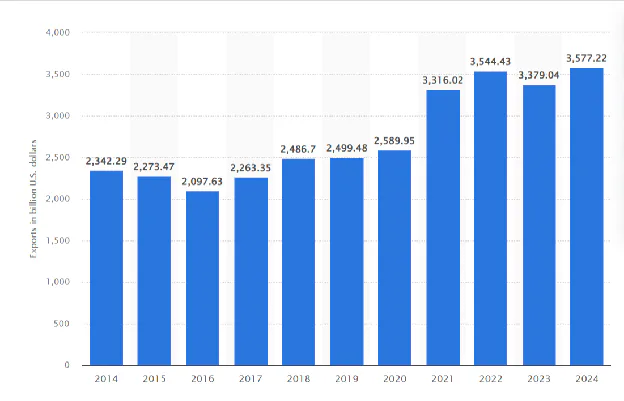
Image credit: Statista
Let's start with the obvious question. If China has over six million manufacturing enterprises, a number that grew by 5.5% in 2024 alone, why is finding the right one still so difficult?
The answer is that "manufacturer" is a loose term. A lot of what comes up when you search for Chinese manufacturers is trading companies, middlemen, and agents, not factories. They can fulfil your order.
They just add margin on top, reduce your visibility into how things are actually made, and often can't solve quality problems at the source because they don't control the source.
Then there's the verification problem. A supplier with a gold badge on Alibaba and a polished website can still be a company of five people operating out of a small warehouse. The certifications look real. The product photos look right. And then the first shipment arrives, and something is off.
None of this means Chinese manufacturing isn't worth pursuing. It clearly is; the scale, capabilities, and pricing are unmatched across most product categories. It just means you need to approach it with a proper process, not a search bar and a phone call.
This guide gives you that process. Step by step.
What China's Manufacturing Base Actually Offers
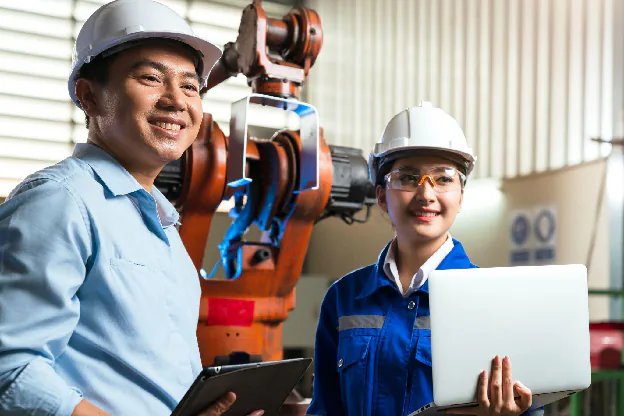
China doesn't dominate global manufacturing by accident. The infrastructure that's been built over the past 40 years, specialized industrial clusters, deep supply chains, an enormous manufacturing workforce, and logistics networks connecting factories to ports, is genuinely difficult to replicate.
Different regions have different specialisms. Guangdong leads in electronics, consumer goods, and furniture. Zhejiang is strong in textiles, hardware, and small machinery. Jiangsu handles precision engineering and high-end manufacturing.
Shandong is significant for its machinery and chemicals industries. Understanding which region your product category is concentrated in helps you search more intelligently.
Beyond geography, China offers something most alternative manufacturing destinations can't yet match: a complete supply chain in one place. Raw materials, components, processing, assembly, and packaging can often all happen within a few hours of each other. That reduces lead times, simplifies logistics, and gives you more control over the production process.
If you're comparing China with other global manufacturing destinations and trying to decide where to source, our global sourcing guide walks you through the decision.
Where to Actually Find Chinese Manufacturers
There are several routes. Each one has a different risk profile and level of effort involved.
B2B sourcing platforms
Alibaba, Global Sources, and Made in China are the most well-known. They aggregate thousands of suppliers in one place, making it straightforward to search by product category, location, and certification. For buyers just starting out, they're the most accessible starting point.
The important thing to understand is what these platforms verify and what they don't. A "Gold Supplier" badge on Alibaba means the company has paid for a premium membership, not that anyone has physically visited the factory or confirmed they're actually a manufacturer. "Verified Supplier" tags typically mean a third party has confirmed the business legally exists. That's a low bar.
These platforms are useful for building an initial longlist. They're not a substitute for proper supplier verification.
Trade shows and factory visits
The Canton Fair, held twice a year in Guangzhou, in April and October, is the largest trade fair in China and arguably the world. Around 26,000 exhibitors attend, and it covers everything from electronics to textiles to industrial equipment.
Walking the floor gives you a sense of what's actually available, who's genuinely manufacturing, and how suppliers present themselves in person.
Other major trade shows include the Export Fair, Global Sources shows in Hong Kong, and sector-specific exhibitions across major manufacturing provinces.
If you have the time and budget, a sourcing trip is one of the most effective ways to compress the supplier evaluation process. You can meet ten factories in three days and leave with a shortlist you have real confidence in.
Industry referrals and networks
Recommendations from people who've already done what you're trying to do are underrated. If someone in your industry has been sourcing a similar product from China for years, their supplier contacts are worth more than a page of Alibaba results. The factory has already been pressure-tested in a real production environment.
Trade associations, industry forums, and LinkedIn are all reasonable places to find these connections. Don't underestimate the value of asking directly.
Sourcing agents
A sourcing agent is someone based in China who can identify manufacturers, handle initial communication, run visits, and manage the relationship on your behalf.
For businesses entering the Chinese market for the first time, or buying in categories they don't know well, a good sourcing agent compresses the learning curve significantly. Our sourcing agent guide covers how to find one and what to look for.
AI-powered sourcing platforms
Increasingly, platforms are using AI to handle the supplier outreach and data collection process at scale. Rather than emailing ten factories individually and managing ten different response formats, an AI agent like ChinaSource can reach out simultaneously, gather standardized responses, and compile the comparison data your team needs, saving significant time at the early evaluation stage.
Manufacturers vs. Trading Companies: Why It Matters
This distinction trips up a lot of first-time buyers. And it's important enough to spell out clearly.
A manufacturer owns the factory. They control production. When there's a quality issue, they can find it and fix it. When you want to adjust a specification, they can do it. When you need a custom component, they have the machinery.
A trading company buys from a manufacturer and resells to you. They don't control production. When there's a quality issue, they have to go back to the factory, which they may or may not have leverage over. They add margin. They can obscure information about who's actually making your product.
Trading companies aren't always a bad choice. For commodity products, low-value purchases, or situations where you're buying a wide mix of items that no single factory makes, a good trading company can be the right answer. But for products with specific technical requirements, tight quality standards, or custom specifications, you want to work with the factory directly.
How do you tell the difference? Ask directly who owns the factory. Request photos of the production floor that include your specific product or the machinery used to make it. Check whether the business address corresponds to an office building or an industrial area. Ask for the business registration documents, which show whether the company is registered as a manufacturer or a trading company.
How to Vet Chinese Manufacturers Properly
Finding a manufacturer is the first step. Verifying they're actually who they say they are is the step most buyers skip, and then regret.
Business license and registration verification
Every legitimate Chinese manufacturer has a business license issued by the State Administration for Market Regulation (SAMR). This document contains the company's registered name, address, legal representative, registered capital, and business scope.
You can verify it through official government databases. If a supplier is reluctant to share their business license, that's a clear warning sign.
The business scope of the license tells you what the company is authorized to do. A company registered as a trading company showing you a manufacturing facility they claim to own is worth probing further.
Certifications, check them, don't just ask for them
ISO 9001 is the baseline quality management certification. Depending on your product and destination market, you may also need CE marking (European markets), FDA compliance (US food and medical), BSCI or SA8000 (social compliance), or RoHS (electronics). Ask for the certificates. Then verify them directly with the issuing body; don't just accept the document at face value. Fraudulent certifications exist.
A 2024 QIMA report found that 59% of factories audited in China passed compliance reviews. That's a reasonable pass rate, but it means 41% didn't. Certification verification tells you which category your candidate factory falls into.
Factory audit
The most reliable form of verification is an on-site audit. A qualified auditor visits the factory, inspects the production facilities, checks equipment and machinery, reviews quality management documentation, and speaks with production staff. The resulting report gives you a grounded, third-party picture of what the factory can actually do.
A standard factory audit in China costs between $150 and $400 per auditor day, depending on location, scope, and the auditor's specialization. For factories in coastal provinces like Guangdong or Zhejiang, average daily rates are around $209. Factories in more remote areas typically add a 10-15% travel premium.
If an on-site visit isn't immediately feasible, digital auditing tools, remote video inspections, documentation review, and structured questionnaires can be used for early-stage screening. But they don't fully replace physical presence, especially for complex products.
References from existing customers
Ask for references. Specifically, ask for customers who've bought similar products in similar volumes. Then actually call them.
Don't just accept a list of company names; have a real conversation about quality, communication, problem-solving, and what happens when something goes wrong.
A factory that's been delivering consistently for similar buyers for several years is a fundamentally different risk profile than one that's new and still building its track record.
Samples before commitment
Never commit to a large order without receiving and testing samples. Order from at least two or three suppliers simultaneously and compare the output side by side.
Keep one approved sample, sometimes called a golden sample, as your quality benchmark for all subsequent production. Any product that deviates significantly from the golden sample is a quality failure, regardless of what the manufacturer claims.
Red Flags Worth Paying Attention To
| Red Flag | What It Usually Means |
|---|---|
| Reluctant to share the business license | They may not be legally registered as a manufacturer, or something in the license would raise questions |
| Prices significantly below the market rate | Material substitution, quality shortcuts, or a desperate supplier that can't sustain the relationship |
| Can't answer specific production questions | Likely a trading company that doesn't actually control the manufacturing process |
| Refuses factory visit or audit | Almost always, something worth understanding before you commit any money |
| Certifications that can't be independently verified | Fraudulent documentation is more common than buyers expect |
| Pushes for a large upfront payment before samples | Significant fraud risk, legitimate manufacturers expect sample requests before large orders |
| Vague or evasive answers to quality questions | Either limited quality management processes or an unwillingness to be transparent |
Getting Quotes That Are Actually Comparable
One of the most common sourcing mistakes is collecting quotes that can't be compared. Different suppliers quote different quantities, different materials, different lead times, and different payment terms. You end up with a spreadsheet of numbers that don't mean the same thing.
The fix is to send every supplier the same brief. The same specifications. The same quantities. The same questions. In the same format.
This is where a structured RFQ, Request for Quotation, process makes a real difference. When suppliers quote against identical criteria, the comparison becomes meaningful. Our RFQ guide covers how to run this process properly, including what to include and how to structure the evaluation.
When you receive quotes, look beyond unit price. Ask for a full cost breakdown, tooling, packaging, quality testing, and shipping separately itemized. Ask what's included in the stated lead time and what isn't. Ask about minimum order quantities at different price tiers. Ask what happens to the price if you come back in six months for a repeat order.
The cheapest quote is rarely the best option. Total cost of ownership, factoring in quality failure rates, re-shipping costs, inspection costs, and communication overhead, often tells a very different story from the unit price alone.
Contract Manufacturing vs. Standard Production
There's an important distinction between buying a product that a factory already makes and having a factory produce something specifically to your design and specifications.
Standard production means you're buying something from the factory's existing range. The molds exist. The process is established. Lead times are shorter, and prices are often lower because there's no upfront tooling cost.
Contract manufacturing means the factory produces something specifically for you, your design, your specifications, and your branding. This usually involves tooling costs upfront (for molds, dies, or custom fixtures), longer lead times for the first production run, and a more collaborative relationship throughout the product development process.
Contract manufacturing comes with specific considerations around intellectual property, tooling ownership, and quality standards that standard purchasing doesn't. Our contract manufacturing guide covers what to think through before entering this kind of relationship.
Quality Control, Before, During, and After Production
Quality control in Chinese manufacturing works best when it's built into the process, not bolted on at the end.
Before production starts
Agree on specifications in writing. Detailed drawings, material specifications, tolerance ranges, surface finish requirements, and any compliance standards your product needs to meet. The more precisely you define what you want, the harder it is for a factory to deliver something different and claim it meets spec.
Approve a golden sample before production begins. This is the physical reference point. Every unit should match it.
During production
A during-production inspection, also called an in-line inspection, is conducted when roughly 10 to 20% of the order has been completed. The goal is to catch problems early, before they've been repeated across the full production run. Issues that surface at this stage can usually be corrected without a major impact on delivery timelines.
Before shipment
A pre-shipment inspection is conducted when production is complete, and goods are packed, but before they leave the factory. Inspectors sample the finished goods against your golden sample, check quantities, verify packaging, and confirm product labeling. This is your last opportunity to catch problems before they're on a ship.
Pre-shipment inspections typically cost $250 to $350 and are conducted by third-party quality control agencies that provide a detailed report with photos. For orders above a few thousand dollars, this cost is almost always worth it.
Ongoing supplier monitoring
Supplier performance doesn't stay static. A factory that performs well in year one can slip in year two when its production capacity fills up, or its quality management team turns over.
Regular monitoring, using a structured supplier scorecard to track on-time delivery, quality pass rates, and responsiveness, keeps you ahead of problems before they become crises. Our vendor scorecard guide covers how to build one that works in practice.
Protecting Your Intellectual Property in China
IP protection in China is a legitimate concern, and it's worth addressing before you start manufacturing rather than after something goes wrong.
Register your trademarks and patents with the China National Intellectual Property Administration (CNIPA) before sharing designs or specifications with any factory. China operates on a first-to-file system; if someone else registers your mark in China before you do, they have legal standing regardless of where your IP originated.
Include clear IP ownership clauses in every manufacturing contract. The contract should explicitly state that all designs, tooling, and specifications belong to you, and that the factory is prohibited from using them to produce for any other buyer.
Consider splitting production across multiple suppliers in ways that mean no single factory has the complete picture of a critical product. This is standard practice for high-value or sensitive designs.
Connecting Your Chinese Manufacturer to Your Procurement Process
Finding the right manufacturer is the sourcing side of the equation. Connecting them properly to your procurement process is the operational side, and it matters just as much.
Before the first purchase order goes out, your supplier needs to be properly onboarded into your system, and bank details verified. Tax information confirmed. Payment terms agreed and documented. Compliance certificates on file. Quality standards agreed in writing.
When these steps are skipped, because there's time pressure or because the supplier relationship starts informally, the problems show up later. Payment failures. Invoice disputes. Compliance gaps that surface in an audit.
For a deeper look at how the procurement process works once a supplier is in place, from purchase orders through to invoice payment, our procure-to-pay guide covers the full cycle.
And if you're building a broader sourcing strategy that covers multiple suppliers across multiple categories, the procurement strategy guide is a useful starting point for thinking about how to structure that systematically.
How ChinaSource Helps at the China Sourcing Stage
The challenge with sourcing from China isn't a lack of options. There are too many options and not enough structured evaluation.
ChinaSource AI agents reach out to qualified manufacturers across global production markets simultaneously, including China, gathering standardized responses that can be compared properly.
Instead of spending weeks emailing factories individually, managing ten different response formats, and trying to construct a meaningful comparison from inconsistent data, you get comparable information in front of your team in a fraction of the time.
By the time a supplier enters your purchasing process, they've been screened, their documentation is in order, and their pricing has been validated against what the market is actually offering. That foundation makes every subsequent step, samples, audits, first orders, and contract negotiations considerably cleaner.
Chinese Manufacturers, Common Questions
How will you know if you're dealing with a manufacturer or a trading company?
Start by evaluating their business license. Then pose direct questions about production, machinery and factory operations themselves. If the answers remain vague or indirect, you're probably not speaking with the actual factory itself.
What certifications should a Chinese manufacturer have?
That depends entirely on your product and target market. ISO 9001 is a really common starting point, but you may also need certifications related to safety, compliance or export requirements. What matters most is verifying any certificate itself, rather than taking it at face value.
How much does a factory audit cost in China?
Costs really vary based on the factory's location, the scope of the audit and who conducts it. The important thing is that an audit is usually a very small cost compared to the risk of selecting the wrong supplier yourself.
Should you really use a sourcing agent when purchasing from China?
It might make sense if you are relatively new to the market or are sourcing a product that has quite a bit of technical complexity involved. A good agent will help you with communication, supplier screening and local follow-up, but only if their whole process and fees are perfectly clear.
How do you get quotes that are actually comparable?
Provide all suppliers with the same brief, the same specifications and the same questions. If your inputs are quite different, then the quotes will be too, and that makes comparison a real mess right from the beginning.
One Last Thing
China's manufacturing base is genuinely extraordinary. The scale, capability, and supply chain depth are hard to match. There is a reason China exports over $3.5 trillion worth of goods each year, and why buyers across industries and regions continue to source from it.
But strong manufacturing capability does not make supplier selection simple. Finding the right factory is still hard. The market is huge, quality varies, and the gap between what a supplier says and what they can actually deliver often only becomes clear when real checks begin. A website and a polished product photo do not tell you enough.
That is why the process matters. At ChinaSource, we believe buyers need to take supplier selection seriously from the start. Build a solid longlist. Ask the right questions. Verify every important claim.
Request samples before placing a full order. And make sure the supplier you choose is built into your procurement process properly, not just dropped into a spreadsheet and forgotten.
That is usually the difference between a sourcing relationship that stays stable for years and one that starts causing problems with the first shipment.