
Product Sourcing Agent 101: What They Do and How to Find the Best One


You might be buying for a brand, a distributor, or an internal supply chain team. Either way, you carry the risk when a supplier misses specs or ships late. And once you move past a basic catalog item, sourcing gets complicated fast. You chase quotes, verify factories, align MOQs and lead times, and try to avoid costly surprises after production starts.
The truth is, finding a factory or supplier worldwide is never a walk in the park; while you may be able to find one online, how do you know the vendor is trustworthy? How do you determine whether their quality is acceptable? And what if they don't understand your language?
For a long time, the answer to these challenges was to hire a sourcing agent. A sourcing agent is a bit like a sleuth for your business; they head out to track down the items you want. But the world has changed. Today, it's not just your human agents; there are AI tools designed to do the heavy lifting for you.
What is a Product Sourcing Agent?
A sourcing agent is a professional who helps your company find products or raw materials. They act as a link between buyers and manufacturers, serving as bridges to ensure smooth transactions.
In B2B buying, people often mix up sourcing and procurement, but they are not the same. Sourcing means you find and validate the right suppliers for a product. Procurement covers the full buying cycle after that, like purchase orders, contract terms, payments, and supplier management. In this article, a “sourcing agent” is the person or service that handles the sourcing phase.
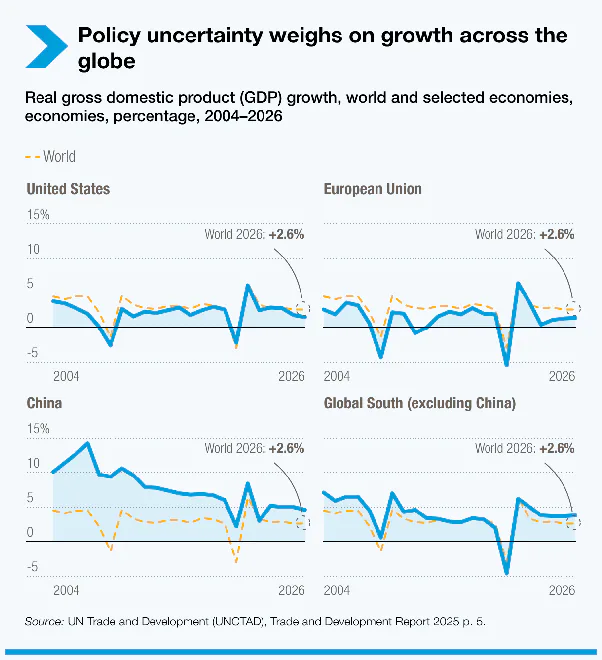
This role matters because economic growth does not move evenly across the world. The chart shows global GDP growth sitting around +2.6% in 2026, while the United States and the European Union run lower and swing differently than China and the Global South (excluding China). When growth patterns diverge like this, supply and demand shifts follow. Factories get busier in some markets and slower in others. Pricing pressure changes, lead times stretch or tighten, and capacity planning gets harder, especially when policy uncertainty rises.
That is why sourcing agents do more than search online. They use networks and local context to find suppliers you might miss, then they verify fit on price, lead time, quality expectations, and basic compliance. Tools like ChinaSource speed this up by keeping outreach, supplier replies, and quote comparisons in one place, so you spend less time chasing details and more time making a clean decision.
What are the jobs of a Sourcing Agent? A sourcing agent focuses on the front half of the buying process, before you place a large order. They help:
-
Find suppliers: Identify factories that can produce your product and meet your target market needs.
-
Vet manufacturers: Verify that the factory is real, stable, and capable of producing at your required scale.
-
Collect and compare quotes: Gather pricing, MOQ, lead time, and key terms in a format you can compare.
-
Support negotiation: Push for better unit cost, clearer terms, and fewer hidden add-ons.
-
Coordinate sampling: Manage sample requests, revisions, and feedback loops until the spec is clear.
-
Set up quality expectations: Define what “acceptable” looks like and help arrange inspection steps if needed.
-
Compliance and shipping support (optional): Some sourcing agents help flag compliance needs or connect you with a broker or freight partner, but this is often handled by procurement.
For a long time, the entire process was a manual job that required agents to make phone calls, visit factories, and send many emails. But now, AI tools are automating these steps, so instead of a buyer having to wait weeks for a human agent to report back, AI can do the heavy lifting much faster.
Why You Need a Sourcing Agent

You might be thinking, "Can't I just do this myself?" Yes, you can try to do this yourself. However, there is a downside. Most people go to websites like Alibaba and try to message factories directly, but this often leads to frustration. Here is why hiring a sourcing agent (or using an AI sourcing platform) is usually a better idea.
1. Access to Better Products
The best factories often don't have good websites; they are busy making products, not marketing themselves. A sourcing agent knows where to look. They can find "hidden" suppliers that offer better quality than the ones everyone else is using.
With modern tools like ChinaSource, this is even more powerful. It uses an authoritative data backbone. This means it has access to over 6 billion customs records and 200 million business contacts. It doesn't just guess; it uses real data to find the best match for your needs.
2. Lower Product Prices
One of the biggest reasons to use an agent is to save money.
Factories often quote higher prices to foreigners because they think you don't know the market rate. A local sourcing agent knows the real price, and they can negotiate on your behalf to cut out extra costs.
3. Custom Products
Do you have a unique idea? Maybe you want to make a specialized kitchen gadget or a custom piece of clothing.
Factories prefer standard orders. When you ask for something "non-standard" or custom, they often get confused or say no.
A sourcing agent helps explain your idea to the factory in a way they understand. This is a key feature of ChinaSource. It is designed for non-standard requests. The AI helps you define exactly what you need, like specs, materials, and packaging, so the factory knows exactly what to quote.
4. Local Market Expertise
Doing business in China, Vietnam, or India is different from doing business in the West. There are language barriers and cultural differences.
A simple misunderstanding can ruin a whole order. For example, "blue" might mean a different shade to a factory than it does to you. A sourcing agent speaks the local language, understands the culture, and helps you avoid unnecessary mistakes.
5. Saving Time
This is the big one. Sourcing takes a lot of time. You have to send emails, wait for replies, ask follow-up questions, and wait again, and sometimes, it can take weeks just to get a simple price quote. A sourcing agent takes this burden off your shoulders, and if you use an AI solution, it's even faster.
Key Qualities to Look For in a Sourcing Agent

Not all agents are the same; some are amazing, and some are... not so good. If you are going to trust someone with your money and your products, you need to choose carefully. Here are the qualities you should look for.
1. Knowledge of the Local Economy
Your agent needs to know the lay of the land. They should know which regions are best for your product. For example, some cities are famous for electronics, while others are best for textiles. If your agent doesn't know this, chances are they'll search for the right product in the wrong direction.
2. Transparency and Reliability
This is the most important rule: No Secrets. Some traditional sourcing agents operate like a "black box." You tell them what you want, and they come back with a price, but they won't tell you who the factory is. They do this to protect their commission.
This is risky for you, and if the agent disappears, you lose your connection to the factory. You should look for a solution that offers transparent shortlists. This is a core value of ChinaSource. You can see who the suppliers are, what they said, and why they were chosen. You are always in control.
3. Industry Knowledge
You want an agent who understands your specific industry. If you are buying medical supplies, you need an agent who knows about medical certifications. If you are buying toys, you need to know about safety standards.
4. Solid Communication
The bedrock of a successful transaction is communication, and the lack of it can frustrate your effort as well.
Your agent needs to speak your language fluently. But more than that, they need to be able to explain technical details.
With ChinaSource, communication is handled by an AI agent that chats with you first to clarify every detail. It asks about your Minimum Order Quantity (MOQ), your target price, and your lead time. It makes sure everything is clear before it talks to the supplier. This conversation-first sourcing prevents confusion later on.
Types of Product Sourcing Agents
| Type of sourcing agent | What it is | Best for | Pros | Cons |
|---|---|---|---|---|
| 1. Traditional Sourcing Agencies | A full company with an office, a team, and structured processes. They usually have long-standing supplier networks and formal workflows. | Larger businesses and buyers are placing big orders that need a stable team and consistent handling. | Reliable and structured. Good when you need scale, repeat orders, and a team that can handle multiple tasks at once. | Expensive because they carry overhead costs (staff, office, operations). Their fees tend to be higher to cover that. |
| 2. Freelance or Independent Agents | One person working alone, often found through freelance platforms or referrals. They run sourcing as a personal service. | Small to mid-sized businesses that want hands-on attention and lower upfront cost. | Personal attention and usually lower cost. Communication can feel direct because you deal with one person. | Limited capacity. If the agent gets sick, busy, or disappears, your project can stall. They may also have less leverage with factories than a bigger agency. |
| 3. Exporting Agencies | A company licensed to export goods and handle export paperwork. In some countries, factories cannot export directly, so an export agent steps in. | Buyers sourcing from regions where suppliers need help with export documentation and compliance. | Gives you access to smaller, cheaper factories that cannot export on their own. Takes paperwork stress off your plate. | They sit in the middle, so communication can slow down, and details can get filtered through a third party. |
| 4. Holistic Sourcing Agencies | A “one-stop shop” that covers sourcing, quality checks, and shipping, all under one roof. | Buyers who want a single vendor to manage the entire supply chain process. | Convenient. You deal with a single company for sourcing, inspection, and logistics, reducing coordination work. | Concentration risk. If that one company underperforms, you have fewer backup options. You are depending on a single point of control. |
| 5. AI-Powered Sourcing Platforms (The New Way) | A digital platform that uses AI to find suppliers, request quotes, and organize supplier data for comparison. ChinaSource fits here. | Businesses that want speed, clarity, and scalable sourcing, whether they are sourcing standard products or custom specs. | Fast, transparent, and data-driven. Quotes can be standardized so you can compare “apples to apples.” Works for both standard and custom requests. Reduces manual back-and-forth. | Newer workflow. Some traditional buyers need time to get comfortable trusting data and platform-led sourcing instead of a single human relationship. |
How the Sourcing Process Works
Whether you use a human sourcing agent or an AI platform, the process usually follows a similar path. Let's walk through the steps, so you know what to expect.
Step 1: Initial Consultation and Requirements
Before anyone can find a product, they need to know what you want.
- The Old Way: You send an email with a rough idea. The agent emails back with questions. This back-and-forth can take days.
- The ChinaSource Way: You have a real-time chat with the AI. The AI knows exactly what questions to ask to "clarify requirements." It asks about specs, compliance needs, and target prices right away. It treats sourcing as a structured conversation, not just a keyword search.
Step 2: Finding the Manufacturer
Once the agent knows what you want, they start hunting.
- The Old Way: The agent asks their friends or looks at a few websites. Their reach is limited to those they know.
- The ChinaSource Way: The system scans over 6 billion trade records. It looks for suppliers with "credible signals," meaning they have a history of shipping products like yours. It doesn't rely on random browsing; it uses hard data.
Step 3: Outreach and Negotiation
This is where the work happens. The agent contacts the factories.
- The Old Way: The agent calls the factory. You have to wait for them to report back.
- The ChinaSource Way: The AI reaches out 24/7 in the supplier's native language. It conducts "multi-round follow-ups." If a supplier doesn't answer, the AI chases them. It collects quotes and key terms automatically.
Step 4: Comparison and Selection
Now you have a pile of quotes. But there is a problem. One factory gave you a price in Dollars, another in Yuan. One includes shipping, the other doesn't.
- The Old Way: You have to spend hours with a spreadsheet trying to make sense of the messy data.
- The ChinaSource Way: The platform does Quote Alignment. It takes all those messy responses and cleans them up. It organizes price, MOQ, lead time, and payment terms into neat columns. It clearly flags any missing info. This makes it easy to compare side-by-side.
Step 5: Sampling and Production
Once you pick a winner, you order a sample. If the sample is good, you give the green light for production. The agent (or you) monitors the process to make sure the factory stays on track.
Step 6: Shipping
Finally, the goods are packed and shipped to you. A good agent will help with the paperwork and customs clearance to ensure the box arrives at your door safely.
Best Practices for Working with a Sourcing Agent
To get the best results, you need to be a good client. Here are some tips to make the relationship work.
Be Clear on Your Goals
You cannot just say, "I want a cheap t-shirt." That is too vague. You need to be specific.
- What fabric? (Cotton, polyester, blend?)
- What weight? (Heavy, light?)
- What color? (Provide a Pantone code if possible.)
- What is your budget per unit?
The more details you give, the better the results. This is why ChinaSource spends so much time on the initial chat, to force you to be specific so the suppliers can give accurate quotes.
Establish Expectations
Tell your agent your expectations for quality and timeframes. If you need the goods by Christmas, inform them about it on Day One. If you have high moral values about treating employees, communicate this clearly.
Communicate Frequently
Do not assume all work is done once you have signed the contract. Regularly update and check the progress of work. Request the necessary information. If you are using any digital platform, log in to keep track of the status of your queries.\
Request for Sample Materials
Never place a big order without getting samples. Photoshop images can deceive. Having a product sample is the only way to gauge its quality. You can touch, smell, or test it. If it does not meet your expectations, request that the factory correct it and provide another sample.
Frequently Asked Questions (FAQs)
What are the risks involved?
The biggest risks include poor communication and hidden fees. A rogue procurement agent may charge a secret commission from the factory, increasing your costs. Alternatively, they may not conduct thorough quality checks. To manage these challenges, use a platform that provides clear supplier lists and reliable information so you do not have to rely solely on trust.
Can they assist with shipping arrangements?
Yes, many procurement agents can assist with arranging shipments. They, however, work with a freight forwarder to facilitate the movement of goods. Effective companies handle all aspects, including procurement and shipping.
How do I know if a Sourcing agent is legit?
Ask for proof of recent work, clear references, and a transparent process. A legit agent will explain how they find suppliers, verify factories, and handle payments and samples. If they refuse to share basic supplier details or push you to pay fast without documentation, that's a red flag.
What information should I give them before they start?
Give exact product specs, target price range, expected order quantity, quality standards, packaging needs, and your deadline. Also, share any compliance needs like materials, labeling rules, or certifications. If you are vague, you will get vague quotes and wrong factories.
Do procurement agents help with quality checks and inspections?
Many do, either through their own team or through third-party inspectors. You should agree on what "quality check" means before you pay. For example, you can ask for pre-production samples, in-process checks, and a final inspection before shipment.
How long does it take to find a supplier and get quotes?
It depends on the product and the level of specificity of your requirements. Simple products can move faster. Custom products take longer because factories need time to review specs and calculate pricing. The bigger point is this. If quotes come back too fast with no questions, the agent probably did not do real vetting.
Can they handle small orders, or do they only work with big buyers?
Some agents prefer big orders because commissions are higher. Others work with startups and small businesses. If your order is small, ask upfront if they support low MOQs and whether pricing or services change at smaller volumes.
Who pays the factory, me or the agent?
It depends on the setup. Some agents want you to pay the factory directly so costs stay transparent. Others collect payment and pay the factory for you. Direct payment often reduces hidden markups, but you still need to confirm bank details carefully to avoid payment scams.
Conclusion
Identifying the right products is the engine that drives your business forward. If you can't source good-quality products at reasonable prices, you can't compete, but the good news is that with a sourcing agent, you can easily achieve this goal. An agent can help identify reliable suppliers, negotiate prices, and address any scams.
However, the sourcing field is changing. The era of limited, time-consuming tasks is over!
ChinaSource will be the key to success in this area. Using artificial intelligence to automate the tiring tasks involved in finding suppliers, meeting product requirements and obtaining quotes will enable you to speed up your work.
- It helps you verify suppliers with billions of trade records.
- It breaks down language barriers through native-language outreach.
- It turns messy quotes into structured comparisons.
Whether you run a small startup and want to launch your first product or have a company that has a range of products available, identifying high-quality suppliers is important, and being able to access useful digital tools such as ChinaSource
can help free up considerable time that would otherwise take weeks to complete.