
What Is an RFP in Sourcing? A Complete Guide for Procurement Teams

Overview
An RFP (Request for Proposal) is one of the best tools a procurement team can use to find reliable global suppliers. This guide explains what it really means, where it fits into the procurement process, when to use it, how to create one and some of the common errors that can quietly undermine even experienced buyers.

A brand finds a new supplier, feels really taken with what it sees at first glance, reaches a rough agreement on pricing over a few emails, and then moves on. For the first couple of months, all appears to be in order.
Then the quality begins to slip. Lead times stretch out. An invoice comes in that doesn't match what was previously discussed. And now we have a fairly loose agreement in place, no clear terms and no clear way out.
Is this scenario familiar to you? It should be. This kind of situation happens pretty often in sourcing, particularly when businesses are moving into new markets and do not yet have established supplier connections to call upon.
Here's the uncomfortable reality: most of these problems were clearly visible even before anything had been signed. They just weren't highlighted because no one introduced a decent procedure for highlighting them.
That's the purpose of an RFP. It's not just a formality. It's not additional paperwork just for its own sake. When executed properly, it's the element making all the difference between a dependable supplier relationship that endures for several years and one that crumbles in a matter of months.
For international companies sourcing across time zones, languages, and regulatory environments, structure is essential. It's essential for managing risk, particularly when you cannot simply get into your car and drive to the factory for a physical handshake with the people you do business with.
So, What Does RFP Mean?
An RFP, or Request for Proposal, is a formal document buyers use to collect structured supplier proposals for complex sourcing needs
When you issue one, you're telling the market: we know what we need, we're ready to evaluate seriously, and we want to see how you'd solve this problem for us. Suppliers who respond to that seriously are almost always the ones worth talking to.
The term covers both the document itself and the broader process around it, including issuing, managing questions, receiving proposals, scoring them, shortlisting, and selecting. Depending on the complexity of what you're sourcing, the whole thing can take four weeks or four months.
For businesses sourcing overseas, say, working with manufacturers in China, Vietnam, or other global production hubs, that process often involves more moving parts than expected. Language barriers, time zone gaps, and unfamiliar compliance standards all add layers that a structured RFP helps manage.
It's one of the reasons companies like ChinaSource build supplier evaluation frameworks into their sourcing process from day one, rather than treating it as an afterthought. Either way, whether you're running the process independently or working with a sourcing partner, the structure is what makes it work.
Where the RFP Sits in the Procurement Process
An RFP hardly ever comes first; in most sourcing projects, there is a natural sequence, and being aware of where the RFP sits in that sequence will help you make the most of it. The usual flow really goes like this:
RFI first, followed by RFP, followed by RFQ.
You'll want to begin with an RFI - a Request for Information, when you're still putting things together. Which suppliers actually exist in this space? What are they capable of? Is the market itself even going to be able to provide what you need? An RFI is relatively low-commitment, quite broad, and incredibly useful during the initial exploration phase.
When you've really narrowed your options - say you've reduced your list of potential suppliers from fifteen to five or six ones really worth seriously considering - that's when the RFP comes in.
Right now, you are asking the shortlisted suppliers to show you how they would handle your project. After that, if you actually need the firm commercial terms locked in before entering a contract, an RFQ (Request for Quotation) handles the final pricing phase.
That said, you don't always need all three stages; if you're very familiar with the whole supplier landscape, you could skip the RFI altogether and get straight to issuing an RFP.
And if your RFP process has already thoroughly captured the pricing details, then a separate RFQ stage may not add much to it. The real point is to match the document to the actual decision you're dealing with - rather than following the usual routine itself.
RFP vs. RFI vs. RFQ: What's Actually Different
These three get jumbled together all the time, even by people who've been in procurement for years. The terminology doesn't help, but they're asking fundamentally different things from suppliers, and using the wrong one wastes time on both sides.
The cleanest way to frame it: an RFI gathers facts, an RFP evaluates solutions, and an RFQ locks in price. Of the three, the RFP is where the real analytical work happens. You're not just asking what a supplier can do, you're asking them to show you how they'd do it for your specific situation.
| Document | What You're Really Asking | Best Used When... |
|---|---|---|
| RFI | Who are you, and what can you do? | You're still building your supplier list and need market intelligence |
| RFP | Here's our project, how would you approach it, and what would it cost? | You have a shortlist and want to compare full proposals, not just prices |
| RFQ | We know exactly what we want, give us your best price | Specs are finalised, and you need firm commercial quotes before contracting |
The RFP is where proposal-based sourcing really lives. Vendors aren't filling out a form. They're making a case for their capabilities, their approach, their quality systems, and why they're the right fit. That's a very different exercise from an RFI or RFQ.
Key Terms You'll Come Across in an RFP
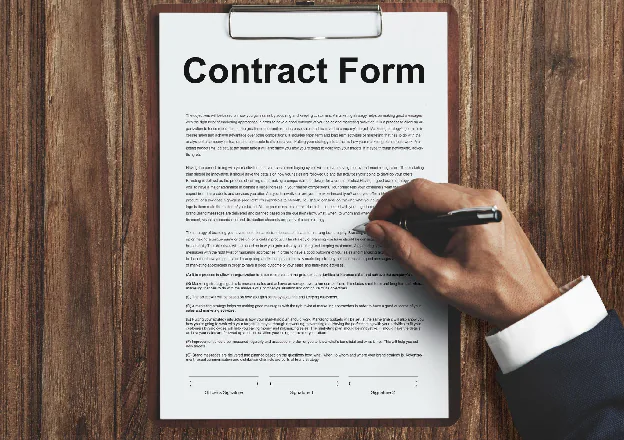
RFPs have their very own vocabulary. Some of it is really useful shorthand itself. Some are carelessly used with hardly any explanation. Either way, here are the terms you'll see most frequently, and what they actually mean.
The overarching contract sets the legal and commercial parameters for your relationship with a supplier. Think of it as the rulebook for all individual projects. It addresses matters such as liability, confidentiality, payment conditions, and dispute resolution.
Statement of Work (SOW)
More detailed than an MSA. A SOW describes the very specific deliverables, timelines and the expected performance results for a particular project or production batch. In sourcing, it is quite often created right after an RFP is awarded and a supplier selected - this is how your proposal really becomes a tangible working document.
Bill of Materials (BOM)
An exhaustive list of each component, material and subassembly essential for the production of your product. Suppliers need an exact BOM before they can provide a meaningful proposal. Without any pricing or lead time, figures are virtually nothing more than guesses.
Lead Time
The whole time from placing an order to receiving the finished goods. In international sourcing, this nearly always includes much more than the production process itself - it also covers the provision of tools, quality inspection, freight booking, and the actual transit time. Always establish what is included in a supplier's quoted lead time itself.
Deliverables
The very specific outcomes that a supplier agrees to be committed to under a contract. Finished product, samples, the compliance documentation, test reports, and whatever else is necessary for the project. A well-written RFP really needs to define deliverables very clearly - so as to avoid even the slightest chance of misinterpretation at a later date.
Evaluation Criteria
The factors you will employ to evaluate the proposals might include price, the quality system, lead time, certifications, sustainability standards, and the supplier's experience.
When you tell the supplier about these factors before receiving the proposal, you're not automatically revealing your decision to them. This is all about giving them the data they need to produce a far superior proposal.
When Should You Actually Issue an RFP?
Not every sourcing decision actually needs an RFP process. However, there will be instances where skipping this process sets up real avoidable risks.
Here's when it really does deserve a try:
-
Entering a new market - a country, a product category, or a manufacturing process that you've never sourced before, and you don't have existing supplier relationships to depend upon
-
The contract involves quite a lot of money, long timeframes or extremely high upfront costs like tooling or moulds. The bigger the commitment, the more that initial proper research will be worth
-
You need suppliers with really precise technical capabilities, special certificates, equipment or compliance credentials, and you want to verify their claims properly rather than taking a sales pitch on trust.
-
Your current supplier relationship has broken down, and you need to evaluate alternatives in a structured way before committing to anyone new
-
You know the outcome you want, but you're genuinely open to different approaches, and you'd rather let suppliers propose solutions than hand them a rigid spec to execute
That last point is really the heart of it. The harder it is to exit a bad supplier relationship once you're in one, the more worthwhile it is to invest properly in the selection process upfront.
When an RFP Is the Wrong Tool

Using an RFP when it doesn't fit the situation is a problem in itself. It eats up time, yours and the supplier's, and can actually produce worse outcomes than a simpler process would have.
Your specs are already locked, and you just need pricing
If the product is fully defined and there's nothing to propose, just a price to submit, that's an RFQ, not an RFP. An RFP asks suppliers to think. An RFQ asks them to quote. Don't use one when you need the other.
Your requirements aren't clear yet
This happens more than you'd think. If your own team hasn't agreed on what you actually need, issuing an RFP just exports that confusion to suppliers. You'll get proposals you can't properly compare. Do the internal work first, or send an RFI to understand what's available before you start writing requirements.
You've already decided on a supplier
Running a competitive RFP process when the outcome is effectively predetermined is bad practice. Word gets around. Other suppliers invest real time preparing proposals they have no real chance of winning. That erodes trust and your reputation in the market.
The project is small and low-risk
An RFP is a meaningful time investment on both sides. For small, straightforward purchases, a direct conversation or a short RFQ will get you to the same place in a fraction of the time.
Before kicking off any formal process, it's worth a quick internal check: Is your team aligned on what you're buying? Has the budget been approved?
Is the timeline genuinely realistic? If any of those are still unresolved, sort them out first. Starting an RFP with loose internal alignment tends to create confusion mid-process, which is harder to manage than just starting a few weeks later.
What a Good RFP Actually Gets You
Beyond the obvious, picking a supplier, a well-run RFP process delivers a few things that informal selection simply can't.
It reduces commercial risk
Pricing discrepancies, capability gaps, compliance issues, these come out during proposal evaluation, not six months into production when you're already locked in. Surfacing problems early, when you still have options, is the whole point.
It forces clarity inside your own team
Writing a solid RFP requires agreement on requirements, timelines, budget, and success metrics. That exercise has value independent of the supplier decision. A surprising number of sourcing problems trace back to the buyer, vague specs, shifting expectations, and undefined KPIs. The RFP process makes you nail those things down before they become someone else's problem.
It creates real competition
When suppliers know they're being evaluated against other credible options, you generally see their best work. Pricing gets sharper. Proposals are more considered. Suppliers who were planning to phone it in tend to either step up or drop out. Both outcomes are useful.
It builds better working relationships
Suppliers who come in through a thorough process tend to be more reliable partners. Both sides understood what they were agreeing to. Expectations were set clearly. That makes the day-to-day relationship easier once the contract is signed.
What to Include in a Sourcing RFP
There's no single correct format. But most effective sourcing RFPs cover the same five areas. Here's a structure that works across most manufacturing and procurement contexts.
Section 1: Company and Project Background
Give suppliers enough context to understand what they're walking into. What does your company do? Who are your customers? Why are you initiating this sourcing project now?
If there's relevant background, an existing supplier you're moving away from, a market you're entering for the first time, or a compliance requirement driving the change, include it. Suppliers who understand your situation write better proposals.
Section 2: Project Scope and Requirements
This is where most RFPs either succeed or fail. Be specific. Product specifications, required certifications, quality standards, expected volumes (including seasonal peaks and troughs), packaging and labelling requirements, and destination market compliance rules. If you have a Bill of Materials, attach it.
Vague requirements in this section produce vague proposals, and vague proposals are almost impossible to compare fairly.
Section 3: Timeline and Key Dates
Set out your full project calendar: when the RFP goes out, the window for supplier questions, when those answers will be distributed, the proposal submission deadline, your shortlisting date, and the expected contract start. Build in enough time at each stage. Rushed timelines either produce lazy proposals or drive away the suppliers worth having.
Section 4: Evaluation Criteria
Tell suppliers how you'll judge their proposals. This isn't handing them an advantage; it's giving them the information they need to put their best foot forward. Common criteria in sourcing: technical capabilities, quality systems and audit history, pricing and total cost of ownership, lead-time reliability, sustainability and ethical sourcing standards, financial stability, and relevant experience with similar products or markets.
Section 5: Required Vendor Information
Be explicit about what you need in the response. Factory details and production capacity, current certifications, recent audit history, client references, product samples or case studies, a detailed pricing breakdown, proposed timeline, and their overall approach to the project.
If anything is an automatic disqualifier, a minimum certification, an export market requirement, or a capacity threshold, state it clearly. Unqualified suppliers should be able to rule themselves out before spending time on a full response.
How the RFP Process Works, Step by Step
Here's what the process actually looks like from start to finish.
Step 1: Internal alignment first
Before anything goes out, your team needs to be on the same page: what you're sourcing, what the budget is, who owns the decision, and what success looks like. This step gets skipped more often than it should.
When it is skipped, the RFP process tends to drift, requirements change mid-stream, goalposts shift, and suppliers end up confused about what they're actually being evaluated on.
Step 2: Build a focused supplier list
Research, referrals, trade contacts, and sourcing platforms all help here. Keep the list tight; four to seven genuinely qualified suppliers are more useful than fifteen who may or may not be a good fit.
Step 3: Draft and issue the document
Write the RFP using the structure above. Be clear about submission format, deadline, and the process for questions.
Step 4: Run the question period properly
Give suppliers a defined window to submit questions. Collect all of them, and send the answers back to every vendor simultaneously. This keeps the process fair. If one supplier gets information, others don't, your comparison becomes meaningless.
Step 5: Evaluate proposals with a scoring framework
Review each response against your evaluation criteria. A weighted scoring matrix helps keep things objective, especially when you have multiple people involved in the review. Watch for proposals that don't actually answer your questions. Generic responses that look like slightly adjusted pitch decks are a warning sign.
Step 6: Go deeper on your finalists
For the two or three suppliers still in contention, the real due diligence starts here. Factory audits, sample requests, financial checks, and reference calls. In international sourcing, a strong proposal and a strong real-world operation don't always go together. This is where you find out.
Step 7: Negotiate and close
Use the proposal as your starting point for commercial terms. Expect discussion on pricing, payment schedules, MOQs, quality standards, and liability. The best proposals give you enough detail that there aren't too many surprises at this stage.
Step 8: Onboard with intention
Once contracts are signed, how you handle the transition sets the tone for everything that follows. The RFP process ends here, but the quality of that handover largely determines whether all the work you just put in actually pays off.
How Buyers Actually Evaluate RFP Responses
 Alt text: Business team comparing supplier proposals for global sourcing decisions
It also helps to understand what happens after proposals land on the buyer’s desk. Even if you are not the buyer, this gives you a clearer view of how decisions get made. And if you are evaluating suppliers, it helps you build a process that is fair, clear, and easier to defend.
In many sourcing projects, especially those involving contract manufacturing, procurement teams use a weighted scoring matrix to compare bids. Each criterion is assigned a value, such as price, quality systems, lead time, or technical fit, and each proposal is scored against those standards.
That creates a ranking the team can point to and justify. Still, experienced buyers rarely rely on numbers alone. The scoring matrix helps narrow the field, but judgment usually decides the final choice.
Did the supplier communicate clearly? Did they respond to the actual requirements, or send a generic pitch with your company name added in? Were the references credible? And during the Q&A stage, did they engage in a useful way, or give the impression that they were barely involved?
Open vs. closed processes
In an open RFP process, vendors know they're competing and may have some sense of who else is in the running. That visibility tends to produce sharper pricing and more effort.
A closed process keeps everything confidential. More common in sensitive categories, or when disclosing the supplier shortlist would create commercial awkwardness.
Either way, document your evaluation. Record how proposals were scored and why decisions were made. It matters for internal accountability, and for the conversations you'll inevitably have with suppliers who didn't make the cut.
RFP Mistakes That Are Easy to Make
Vague requirements
The most common problem, by far. If your RFP doesn't specify what you actually need, suppliers fill the gaps with assumptions, and those assumptions won't always match reality. Be as specific as the project allows. If you can't be specific yet, the RFP isn't ready to go out.
Hiding the budget
Some buyers leave budget figures out of the RFP, thinking it gives them negotiating leverage. What it usually produces is a wide spread of proposals at completely different price points, most of which aren't useful. Sharing a realistic budget range, even a rough one, saves everyone time and gets you more comparable proposals.
Too many suppliers on the list
Fifteen vendors sounds like thorough due diligence. In practice, it means weeks spent reviewing proposals from suppliers who were never realistic options. It also signals to serious vendors that you're not particularly selective, which doesn't exactly motivate their best effort. Keep the list focused.
Skipping references
A proposal is a sales document. It's been written to impress you. References are where you find out what working with this supplier actually looks like day to day. Call them. And if you can track down clients who aren't on the supplier's provided list, do that too.
Making price the whole decision
The cheapest proposal almost never represents the best value once you factor in quality failure rates, rework costs, delayed shipments, and the communication overhead of a supplier who doesn't quite understand your requirements. Total cost of ownership, not unit price, should anchor how you compare proposals.
RFP FAQ
What does RFP stand for?
Request for Proposal. It's a formal document a buying company sends to potential suppliers asking them to submit a full proposal, covering their approach, capabilities, timeline, and pricing, for a specific sourcing project.
Can you skip the RFI and go straight to an RFP?
Yes, and often it makes sense to. The RFI stage is most valuable when you're exploring an unfamiliar supplier market or genuinely don't know who the credible options are. If you already have that picture, from prior experience, research, or referrals, issuing an RFP directly is perfectly reasonable. Don't add stages to a process that doesn't need them.
Should an RFP include pricing?
Most sourcing RFPs do ask for some form of pricing, at least a cost breakdown or pricing structure. Whether you need a separate RFQ after that depends on how detailed the RFP pricing is and whether you need binding commercial terms before contracting. Just make sure your specs are detailed enough before asking for prices. Broad quotes against vague requirements aren't useful for anything.
How long does the RFP process usually take?
Anywhere from four weeks to three months, depending on complexity. Simpler projects with a known pool of suppliers can move quickly. Anything that requires factory audits, multiple sample rounds, or legal review of contract terms takes longer. Don't compress the timeline to the point where suppliers can't put together thoughtful responses; you'll see it in the quality of what comes back.
What's the difference between an RFP and a tender?
In practice, the terms are often used interchangeably. A tender tends to be more formal and is common in government procurement or large infrastructure projects where bids must meet strict compliance rules. In private sector sourcing, RFP is more typical, but the underlying process is similar. If you receive a "tender" document, treat it like an RFP.
How many vendors should receive an RFP?
Four to seven is a sensible range for most sourcing projects. Enough to create genuine competition and surface a real range of options, but not so many that you spend weeks reviewing proposals from suppliers who were long shots from the start.
To Wrap Up
An RFP won't guarantee a good sourcing outcome. Nothing does. But it's one of the more reliable ways to improve your odds by making both sides get specific about what they're agreeing to before the contract is in place.
The businesses that get the most out of the RFP process are the ones that treat it as a genuine tool rather than a compliance exercise. They know when a project warrants one. They put effort into the document. And they run the evaluation with enough structure that the final decision is defensible.
That level of rigour matters even more in international sourcing, where the distance between you and a supplier makes informal selection genuinely risky. If you're building a sourcing process from scratch, or trying to bring more structure to one that's grown a bit ad hoc, ChinaSource helps businesses do exactly that.
From identifying credible manufacturers in key global markets to managing supplier evaluation from first contact through to contract, the goal is always the same: make sure the supplier you choose is actually the right one.