
What Does Original Equipment Manufacturer (OEM) Mean?

You’ve probably seen “OEM” on a parts listing and paused for a second. Maybe you ignored it and just bought what looked like the right fit. Or maybe you paid more because “OEM” sounded safer.
This article clears it up fast. You’ll learn what an original equipment manufacturer is, what an OEM part really means, and why it matters when you’re buying replacement parts or upgrading hardware.
What is an Original Equipment Manufacturer (OEM)
An OEM (Original Equipment Manufacturer) is a company that manufactures a part or component used by another company in its finished product. An OEM part is the original type of part used during the first build.
This isn’t a small niche either. In the global automotive parts market, OEM supply chains accounted for 60.74% of revenue in 2025, underscoring how much of the parts business remains with original components supplied directly to manufacturers.
For example, when Honda builds a new Accord, it does not make every nut and bolt itself. Brake pads might come from Akebono, tires from Bridgestone or Michelin, and electronics from suppliers like Denso. Those suppliers are OEMs because they make the original components Honda uses during production.
Same thing in computers. When HP assembles a desktop, it uses an operating system from Microsoft, a processor from Intel or AMD, and memory from Samsung or Micron. HP integrates these OEM components into one working system.
An OEM replacement part is supposed to match the part installed during original manufacturing. So if you buy an OEM brake pad or OEM sensor, the expectation is that it is the same spec the factory used.
Why Companies Use OEMs
Companies rarely manufacture every component in-house because it is not practical at scale. OEM suppliers exist to handle highly specialized parts and processes that would be costly and time-consuming for the brand to replicate.
First, OEMs provide specialization. A vehicle manufacturer may excel at overall design, engineering, assembly, and quality systems, but components such as spark plugs, braking systems, sensors, and electronics require dedicated expertise. OEM suppliers focus on narrow product areas and refine their processes over many years, which often results in stronger performance and more consistent quality.
Second, OEMs reduce capital and operating costs. Building and operating separate facilities for every component would require major investment in equipment, tooling, labor, and compliance. By sourcing from OEM partners, companies leverage existing production capacity rather than duplicating it internally. OEMs also supply the same or similar components to multiple customers, increasing production volume and lowering per-unit cost through economies of scale.
Third, OEM partnerships accelerate time-to-market. When a company needs to launch a product on schedule, using established OEM components avoids the delay of developing and validating new manufacturing lines from scratch. This allows the brand to focus internal resources on the areas that differentiate the final product while relying on proven suppliers for critical parts.
OEM vs. ODM: What’s the Difference?
OEM (Original Equipment Manufacturer) means one company builds a product based on another company’s design and specifications. The buyer owns the design. The OEM handles production.
ODM (Original Design Manufacturer) means the manufacturer designs the product and builds it, then other companies can buy it and sell it under their own brand name. In this model, the manufacturer owns the original design.
An ODM designs and makes the product. Other companies can purchase these ready-made products, apply their own label, and sell them under their brand name. This is common in consumer electronics. For example, an ODM could make a generic tablet computer, and multiple brands could sell the same product under different names.
With OEM, you hire a manufacturer to build a product based on your design. With ODM, the manufacturer creates the design and builds the product, and you are mainly choosing branding and minor custom details.
Both models have their place. OEM works when you need a custom product and want control over design. ODM works when you want to speed to market with lower upfront investment. Neither model is better. The right choice depends on your goals.
Benefits of Using an OEM in Your Supply Chain
For businesses that want to build a product, dealing with OEMs offers some significant benefits. I’ve witnessed this from the sourcing side, and it is quite apparent how this model came to dominate.
Better quality control
Because the OEM is focused only on that part, they have often honed their process over many production cycles. A company that’s been making hydraulic pumps for 30 years is likely to make better hydraulic pumps than you can, should you suddenly decide to start making them. That expertise is valuable.
Compatibility
OEM components are built to be compatible with the other parts in your system. When car companies test their own cars, they test with OEM parts installed. Everything works together as intended. And even if the part is technically correct, there’s sometimes a bit of compatibility risk with aftermarket options.
Free Time and Resources
Additionally, using an OEM also allows you to free your time and resources to focus on innovation. No more killing your time trying to build something in every layer and spreading your team thin around everything.
Apple doesn't even make its own processors anymore. OK, they do design them, but the actual making happens by OEM partners like TSMC. This allows Apple’s engineers to concentrate on chip design and product integration rather than running fabrication facilities.
Flexibility
There's flexibility too, where demand suddenly spikes, an established OEM supplier might have the capacity to ramp up production more quickly than you could do it all yourself. And when demand falls, and it does fall, you’re not left with idle factories sucking cash.
OEM in the Automotive Industry
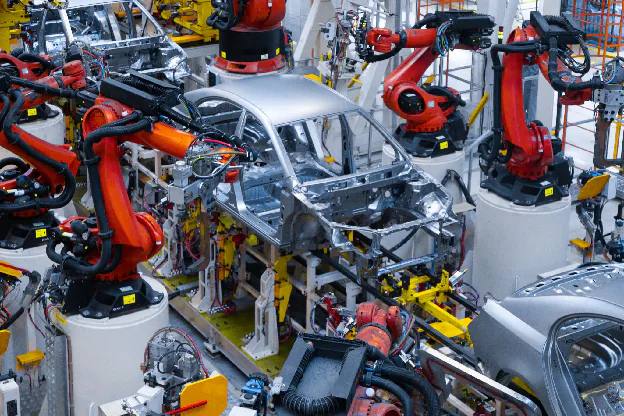
The automotive industry is honestly the best example of how the OEM model works at a massive scale.
When you pop the hood of your car, almost nothing you see was made entirely by the company whose badge is on the front. Car manufacturers like Ford, GM, and Honda function more as assemblers and system integrators than as manufacturers of individual parts.
They design the overall vehicle, set specifications for each component, and manage the insanely complex supply chain that brings it all together. But the actual parts? Made by hundreds of different OEMs.
Some of these automotive parts suppliers are huge. Bosch, for instance, supplies components to basically every major car manufacturer. Continental makes everything from brake systems to electronics. These OEMs invest heavily in research and development, often advancing automotive technology that eventually makes it into cars from multiple brands.
When you're buying replacement parts for your vehicle, the OEM vs aftermarket distinction becomes super practical. OEM auto parts will definitely fit right and meet the original specs. The dealership sells OEM parts, and they're typically pricier. Aftermarket options from reputable manufacturers can be just as good, sometimes better, honestly, but there's more quality variation.
Here's something interesting that not everyone realizes: sometimes the OEM part and the aftermarket part are literally made by the same company, in the same factory. The difference is that the OEM part meets the car manufacturer's specific requirements and comes with their approval, while the aftermarket version might be made to slightly different specs or standards. Or maybe it's identical, just without the official branding. The automotive parts world is weird like that.
OEM Software and Computer Manufacturers
The computer industry has its own take on OEM, especially with software, and it's a bit different from physical parts.
When you buy a computer from Dell, HP, or Lenovo, it usually comes with Windows already installed. That's an OEM version of the operating system. Microsoft sells these licenses at a discount to computer manufacturers, who include them with the hardware they sell.
OEM software typically has limitations compared to retail versions. An OEM Windows license is usually tied to the specific computer it came with; you can't just transfer it to a new machine later. The price is lower because the computer manufacturer is buying in bulk, and the license is non-transferable. To be fair, most people don't care about this restriction because they're not planning to move their Windows license to another computer anyway.
Computer manufacturers use OEM partnerships extensively for hardware, too. A Dell computer might have an Intel processor, Samsung memory, a Seagate or Western Digital hard drive, and Nvidia or AMD graphics. Dell's job is to integrate all these OEM components into a system that works smoothly, providing customer support, and standing behind the final product.
This is actually pretty convenient for consumers, I think. Instead of buying all the components separately and assembling them yourself, which plenty of people do, and if you're into that, great, you can buy a complete system where someone else already did the compatibility testing and assembly work. You pay a bit more for the convenience, but you also get a warranty and support.
OEM Partnerships and Supply Chain Management
Building strong OEM partnerships is crucial for companies using this manufacturing model. It's not just about finding the cheapest supplier, though cost obviously matters. It's about finding reliable partners who deliver consistent quality, meet deadlines, and can scale production when needed.
When a company decides to use an OEM for a particular component, it's creating a dependency. If that OEM supplier has production problems or quality issues, it can shut down the entire production line. That's why many companies work with multiple suppliers for critical components or at least have backup plans ready.
The relationship between a manufacturer and its OEM suppliers is often pretty close. The OEM might get early access to product roadmaps so they can prepare for upcoming production needs. Sometimes there are joint engineering efforts to improve components or reduce costs. In some cases, the manufacturer even invests in their OEM partners to ensure they have the capacity to meet future demands.
Supply chain disruptions—like what we all saw during the pandemic—really highlighted how important these OEM relationships are. When one link in the chain breaks, the whole production process can grind to a halt. Companies that had diversified their OEM suppliers or had strong partnerships with flexible manufacturers were way better positioned to weather those disruptions. The ones that relied on a single supplier for critical components? They struggled.
OEM Part vs. Aftermarket Part
Here is where it gets interesting, though, for people like us who want to fix things.
You’ll have two basic choices when you need a new part (we’re talking cars, since this is where most people experience this): OEM and aftermarket parts. Sometimes the decision isn’t as neatly cut-and-dried as it’s often made out to be.
An OEM part is produced by the original equipment manufacturer (or a third party authorized by them). It’s also supposed to be the same part your car had when it rolled off the factory line. If Toyota says it’s a “genuine Toyota part,” it's OEM. Now, here’s something you don’t know: It very well may have been made by a Toyota supplier, not Toyota itself. But it meets Toyota specifications and the company's quality requirements; that's all that matters.
Aftermarket parts are not produced by the car manufacturer; instead, they are produced by such companies. These are supposed to fit and work like the originals, but they’re not produced by the car company or its authorized suppliers. They're usually cheaper. Occasionally, I’ve observed this: they are even better than the original. But quality varies a lot.
When to Choose OEM vs. Aftermarket
| Decision point | Choose OEM when… | Choose aftermarket when… | What you should check |
|---|---|---|---|
| Part criticality | The part is critical and reliability matters most (engine components, brakes, airbags, structural parts). | The part is less critical and mainly about convenience or routine upkeep (floor mats, some interior accessories, air filters, cabin filters). | Ask: “If this fails, could it cause an accident or major damage?” If yes, lean OEM. |
| Safety risk | It affects safety systems or vehicle control. | It does not affect safety systems. | Verify the part meets the correct specs and fitment for your exact model and year. |
| Cost vs peace of mind | You prefer lower risk and predictable quality, even if it costs more. | You want better value, and you’re willing to compare brands. | Compare total cost, lifespan, and any labor costs if the part fails early. |
| Quality consistency | You want consistency and fewer surprises. | You’re buying from a reputable aftermarket brand with a strong track record. | Check brand reputation, reviews, and what experienced mechanics commonly recommend. |
| Warranty impact | Your vehicle is still under warranty and you want to avoid disputes. | You understand the warranty terms and the part choice won’t create coverage issues. | Read your warranty terms and confirm whether non-OEM parts affect coverage for related repairs. |
| Business sourcing angle | You need predictable output, stable quality, and lower operational risk. | You have a verified alternative supplier that delivers the right quality at better cost. | Evaluate supplier reliability, quality controls, lead times, and risk of defects or delays. |
The Importance of OEM in Modern Manufacturing
I think the OEM business model is one of those things that’s so foundational to how products get made today that we don’t even notice it. But when you take a step back, it’s hard not to be impressed by it.
How the OEM system really powers modern products
This OEM system has been remarkably effective at building a complex, global manufacturing setup where many specialized links work together to make the products we use every day. No single company can realistically have the know-how, resources, and factory capacity to make everything that goes into a modern car or computer from scratch. That would cost an impossible amount and it would be wildly inefficient.
Specialization is the real advantage
By letting companies focus on what they do best and sourcing the rest from original equipment manufacturers, we end up with better products for less money, plus more room for innovation. Specialization pushes quality forward. When a company spends decades making one type of component, they usually get very good at it.
The downside: supply chains can break
But supply chain complexity can also be a weakness. We’ve seen that with chip shortages, pandemic disruptions, and geopolitical problems that interrupt the flow of parts and components. Companies are now thinking more carefully about resilience, not just efficiency. That might mean working with OEMs across different regions, or keeping multiple suppliers for critical parts so one issue doesn’t stall everything.
Working With the Right Partners Makes All the Difference
Whether you're running a business that needs to source components or you're just a regular person trying to fix your car or upgrade your computer, understanding what OEM means helps you make better decisions.
For businesses navigating global sourcing and procurement, this can get complicated fast—partnering with experienced professionals who understand the landscape can be a game-changer.
ChinaSource supports the first round of OEM sourcing by capturing requirements, contacting suppliers to collect quotes and terms, and aligning supplier replies into a consistent comparison view with gaps clearly flagged. This helps buyers evaluate suppliers faster without relying on scattered emails and inconsistent quote formats.
The right sourcing partner understands the nuances between OEM and aftermarket options, knows how to evaluate supplier capabilities, can help with negotiations, and basically helps build the partnerships that power successful manufacturing operations. Because at the end of the day, using an OEM isn't just about buying parts—it's about building relationships with suppliers who become part of your success.
Next time you're shopping for replacement parts or wondering how your favorite gadget was assembled, you'll have a better appreciation for the network of original equipment manufacturers working behind the scenes to make it all happen.
Frequently Asked Questions
What does OEM actually mean when you see it on a part listing?
OEM means Original Equipment Manufacturer. In plain terms, it’s a company that produces parts used inside another brand’s finished item. The key point is this. The OEM part is usually the original part type that was used when the product was first built. That’s why an “OEM brake pad” or “OEM sensor” often costs more. You’re paying for a part made to the same spec the brand approved during production.
Who is the OEM? The brand you know, or the supplier behind the scenes?
Most of the time, the brand name you see on the final product is not the company that produces every piece inside it. The brand may design the full system and handle assembly, while a separate company that produces parts supplies key components. Think of laptops, cars, and appliances. These are built from many components or products sourced from specialist suppliers. So the OEM might be a supplier you never heard of, yet their part is sitting inside something you use every day.
How does the OEM manufacturing process work in real life?
It starts with requirements. The brand gives specs, measurements, materials, tolerances, and performance targets. Then the OEM runs the manufacturing process to meet those targets, and this is where quality control gets serious. This also answers the question many people ask. Parts are made to match a spec, not to match a logo. That’s why two parts can look identical, yet one lasts longer or fits better. The spec and the process decide the result.
What’s the difference between OEM and ODM?
OEM means the buyer owns the design, and the supplier builds it. ODM is different because the supplier handles design and manufacturing. An ODM designs a product, builds it, and then other companies buy it and rebrand it. This is common in electronics and accessories where speed matters. If you want a quick way to remember it, use this. OEM builds your design; ODM sells you theirs.
What is a value-added reseller, and where does it fit into OEM parts?
A value-added reseller buys OEM hardware or software, then adds something useful before selling it to you. That “value” could be configuration, installation, testing, bundling, support, or a custom setup for your needs. Here’s a quick definition and example scenario. A reseller might buy OEM computer components, assemble a workstation, install drivers and software, test stability, and then sell it as a ready-to-use system.