
What Is Digital Procurement: A Definitive Guide For Global Teams


With the growing need for stringent compliance, supplier risk management, and sustainability, procurement teams face increasing pressure to create strategic value without sacrificing control or speed. Leadership also expects clear visibility into spend, contract adherence, and supplier performance across regions.
When data is scattered across disconnected tools, finance teams lose control, and businesses make sourcing decisions using incomplete information. Digital procurement addresses this gap by bringing structure, traceability, and measurable oversight to the source-to-pay lifecycle.
However, many companies rush to digitize approvals and payments while ignoring the front end of procurement, where they find suppliers and collect quotes. When you receive quotes in different formats, with missing details like MOQ or lead time, that mess flows straight into the rest of the system.
Tools such as ChinaSource address this gap at the sourcing stage by organizing supplier outreach, aligning quote details, and producing a clean shortlist before you issue contracts and purchase orders.
When the sourcing stage is structured from the start, the rest of the procurement process becomes easier to manage. You create contracts based on accurate terms and speed up approvals with complete data. Reporting also becomes more reliable because supplier information is already aligned.
What Is Digital Procurement?
Digital procurement is the use of technology to automate, optimize, and enhance procurement workflows and processes. It can include systems and tools such as contract lifecycle management (CLM), data analytics, e-procurement software, digital sourcing platforms, and AI to streamline and optimize procurement operations across the entire source-to-pay (S2P) lifecycle.
Digital procurement increases an organization's efficiency in sourcing, purchasing, supplier management, and spend analysis.
Digital Procurement vs. Traditional Procurement
Legacy or semi-manual systems often rely heavily on email, spreadsheets, and disconnected tools. This makes them slow and error-prone, limiting visibility into supplier performance and spend. These systems are slow and resource-intensive, which usually leads to inefficient sourcing, contract management, and approvals.
Implementing digital procurement enables you to automate these activities and streamline processes across the source-to-pay cycle. This reduces administrative overhead and cycle times, leading to proactive supplier relationship management. The table below compares digital and traditional procurement.
| Aspect | Digital Procurement | Traditional Procurement |
|---|---|---|
| Process Structure | Centralized system with defined workflows | Relies on manual steps and informal processes |
| Data Management | Stores supplier data, quotes, and documents in one place | Uses spreadsheets and separate files across teams |
| Scalability | It can handle high volumes of suppliers | Becomes harder to manage as volume increases |
| Quote Comparison | Standardized format makes side-by-side comparison easier | Quotes arrive in different formats, hard to compare |
| Communication | Managed within a platform with tracked conversations | Emails, calls, and messages are not unified within a platform. |
| Visibility | It can track status, approvals, and supplier responses in real-time | Limited visibility. Depends on individual updates |
| Decision Support | Data-driven insights and reporting tools | Decisions rely more on experience and manual review |
When supplier volume increases, manual tracking makes it harder to compare quotes, monitor contract terms, and control spend across regions. It's critical that businesses modernize their procurement to overcome such challenges.
Why Digital Procurement Matters for Enterprises
Procurement needs and processes expand and become more complex as organizations grow. What would usually involve a small group of suppliers and quick approvals will now span multiple countries, currencies, and regulatory environments.
Dealing with a global supply chain and the constant changes in international business dynamics also adds complexity, even for established organizations. These realities require that finance, legal, and operations teams have access to and work with accurate, integrated procurement records. The leadership will also expect transparency around spend, supplier performance, and policy adherence.
It's difficult to coordinate all of these when data is in private spreadsheets or scattered across disconnected systems. A structured system addresses that, harmonizing business data and introducing consistency and visibility into the procurement operation.
Benefits of Digital Procurement
Digital procurement changes how teams control costs, manage suppliers, and execute sourcing activities. Here are a few pointers.
- Cost Control and Spend Optimization: Digital procurement supports full spend visibility, standardized quote comparison, and analytics, making it easier to identify price variances and supplier overlaps. These ensure you can consolidate suppliers, negotiate better terms, and reduce maverick spend.
- Enhanced Visibility and Control: Digital procurement records each transaction, approval, and supplier interaction, with timestamps and user accountability. This makes it easier to detect delays, enforce policy rules, and identify unauthorized spend before it escalates.
- More Flexible Supply Chain: With improved visibility into supplier data and performance metrics, teams can assess risks earlier and evaluate alternative suppliers more efficiently, supporting faster contingency planning when needed.
- Improved Risk Management and Compliance: Digital tools monitor supplier performance, track regulatory requirements, and send alerts for violations or contract expirations. This reduces compliance gaps, prevents contract lapses, and lowers the risk of financial penalties or supply disruptions.
- Improved Working Capital Management: Digital procurement supports demand forecasting, invoice matching, and structured tracking of purchasing commitments. When integrated with finance systems, this can improve working capital management and make cash flow more predictable.
- Faster Procurement Cycle Times: Digital procurement moves RFQs, approvals, and supplier communication into defined workflows with clear tracking. This ensures that workflows are standardized and trackable, reducing sourcing timelines, which may contribute to faster product development and go-to-market cycles.
These benefits do not happen by default. You need to set the right priorities when you implement technology solutions. That is why digital procurement strategies are critical.
Digital Procurement Strategies
Beyond adopting tools and technologies, strategies define how an organization prioritizes, sequences, and governs technology adoption. This ensures that digital tools are used in the right way to improve processes. Here are some digital procurement strategies.
Digital Marketplaces and Supplier Networks
Companies can struggle with supplier discovery and sourcing when they only rely on their existing supplier base. Digital marketplaces and supplier networks address this by expanding their access to a broader range of vetted suppliers.
They also harmonize supplier selection, enabling companies to easily analyze and compare prices and offerings. These ensure they can find better deals, save costs, and adapt quickly to market changes. Supplier networks also simplify onboarding and standardize documentation, reducing administrative workload. When using them, businesses should still verify supplier capability beyond profile listings to avoid inflated expectations.
E-Procurement Platform Implementation
E-procurement platforms centralize purchasing workflows and streamline procurement. This centralized system enables businesses to manage tasks, such as purchase requests, approvals, and purchase orders.
It standardizes internal buying processes, enforces policy controls, and connects procurement with finance systems. This reduces manual errors, increases spend visibility, and helps organizations manage purchasing activity at scale. Businesses still need to align internal approval hierarchies and purchasing policies before rolling out the platform.
Predictive Analytics for Demand Forecasting
Using predictive analytics for demand forecasting improves supply chain planning. It ensures businesses can meet customer needs, anticipate market shifts, and adjust their procurement strategies in line with prevailing market dynamics.
This efficient resource allocation can, over time, become a source of competitive advantage. However, forecast accuracy depends on clean historical data. Businesses must ensure that past purchasing records are error-free and consistent; otherwise, the model output may mislead planning decisions.
AI-driven Workflow Automation
AI-driven tools can assist with data extraction, quote comparison, compliance checks, and workflow routing. They help teams process supplier responses faster but do not replace procurement judgment. Results depend on data quality and oversight.
Supplier Relationship Management (SRM)
Given that procurement can heavily depend on partner performance, email chains are not the most efficient way to manage them. SRM tools offer the right structure to support communication, onboarding, and supplier evaluation, and to control KPIs. Over time, they improve supply stability and negotiations and improve the quality of products and services sourced.
Centralized Procurement Data and Tech Stack Integration
Digital solutions deliver optimal performance only when they are integrated with existing systems. Centralizing data also ensures that companies can manage data from a single location. This single-source-of-truth approach unifies data and removes silos, ensuring that data is not locked away on each platform.
Teams across departments can work with the same data and share information that supports procurement decision-making. To ensure its success, system owners across departments must agree on data ownership and standard definitions.
How to Implement Digital Procurement
Implementing digital interventions requires careful planning to ensure successful adoption and transition without disrupting business operations. This step-by-step process outlines how businesses can implement digital procurement.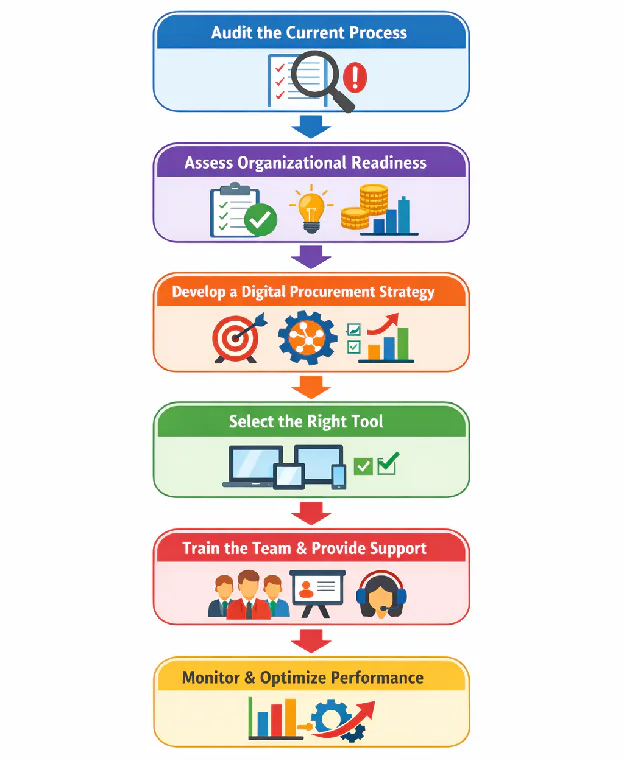
Step 1: Audit the Current Processes
An audit helps you identify the gaps, bottlenecks, and inefficiencies in your current procurement processes that need to be addressed. Engage the procurement team to understand the overall process and workflows. Map the existing processes to find gaps. This baseline assessment will inform the scope of your digitalization efforts and what requirements to focus on.
Step 2: Assess Organizational Readiness
With the process audit, you can build a business case. Next, ensure the organization is ready for change. It may involve securing stakeholder buy-in, and other steps, such as:
- Checking integration needs to ensure the new systems can support your existing technology.
- Outlining a strategic roadmap for change.
- Identifying the key metrics that define success.
- Ensuring that the decision-makers can commit the required budget.
Finally, assess the culture and consider how it can support the people who will implement the systems at the operational level.
Step 3: Develop a Digital Procurement Strategy
Build your strategy based on the business needs and success metrics. For instance, you may prioritize AI-driven automation to shorten procurement cycles or deliver consistent RFQ responses and quote comparisons. If you want to implement strategic sourcing, consider AI-driven vendor management tools to strengthen supplier partnerships.
Step 4: Select The Right Tool
With a clear strategy and vision, you’ll know which digital procurement tools meet your business goals. Ensure your selected options integrate with your existing technology stack. Since you’re clear on your integration needs from step one, it's then easy to compare several tools and select those that meet your requirements.
Step 5: Train The Team and Provide Ongoing Support
Once you have selected the digital tools to adopt, you’ll need to train the team to use them. This is essential because the adoption depends on it. Provide structured training, request feedback, and implement change management strategies. Here are some pointers on how to do it:
- Provide tutorials, hands-on workshops, and adequate learning resources.
- Get employee feedback and highlight the benefits of the digital tool for their work.
- Provide support and assistance to resolve issues during onboarding.
Consistent training and support ensure that the system delivers real value instead of becoming another unused tool.
Step 6: Monitor Performance and Implement Continuous Optimization
After implementation, track the relevant KPIs already defined. This may include cost savings, procurement cycle time, supplier performance, or others, depending on business needs. Use the insights to refine your procurement processes, improve the system, and adapt to changing business requirements.
Common Mistakes When Adopting Digital Procurement
While there are clear benefits to adopting digital procurement, how an organization goes about it can determine its success or failure. Here are some common issues that may arise during that process.
Poor Data Quality: Digital procurement depends on accurate supplier records, item master data, pricing terms, and contract details. When this data is incomplete or outdated, it leads to pricing errors, compliance gaps, and supplier disputes.
Fix: Clean, standardize, and maintain master data as a core part of the implementation plan.Digitizing Broken Processes: Many companies automate approvals and sourcing workflows without first fixing unclear roles or inconsistent steps. This creates digital bottlenecks and amplifies existing inefficiencies.
Fix: Map and simplify procurement workflows before digitizing them.Focusing on Tools Instead of Outcomes: Some organizations implement procurement software without defining clear performance goals. No one is tracking relevant KPIs. This can reduce the adoption rate and lead to leadership questioning the ROI
Fix: Define specific KPIs and business targets before selecting and rolling out technology.Ignoring Supplier Adoption: Digital procurement tools often require suppliers to submit documents, respond through portals, or follow structured workflows. If suppliers find the system difficult to use, it may reduce response time and engagement.
Fix: Select intuitive tools and provide clear onboarding guidance to suppliers from the start.
Avoiding these mistakes lays the foundation, but success often depends on selecting tools that align with your structure, scale, and procurement goals.
Digital Procurement Tools to Consider
Digital procurement offers various tools that support different aspects of the procurement process. Here are the different types of digital procurement tools.
| Type Of Digital Procurement Tool | What It Does | Best Used For |
|---|---|---|
| E-Procurement Platforms | Manages purchase requests, approvals, and purchase orders in one system | Companies that want better control over internal purchasing and spending |
| E-Sourcing Tools | Handles RFQs, RFPs, supplier bidding, and structured quote comparison | Teams sourcing new suppliers or running competitive tenders |
| Supplier Management Systems (SRM) | Stores supplier profiles, tracks performance, certifications, and risk data | Companies managing many suppliers across regions |
| Contract Management Software | Creates, stores, tracks, and renews supplier contracts in a structured way | Organizations that need structured tracking of contract terms and renewal dates |
| Procure-To-Pay (P2P) Systems | Connects purchasing with invoicing and payment processes | Companies that want full visibility from order to payment |
| E-Commerce Procurement Solutions | Enables online purchasing through digital catalogs or supplier marketplaces | Businesses buying standardized or repeat-use products |
The best digital tool for any team depends on the capabilities required, required integrations, and budget. Below are some of the best digital procurement tools available. These tools operate at different stages of the source-to-pay lifecycle, so selection depends on where your bottlenecks exist.
ChinaSource
ChinaSource is a sourcing platform built to help global buyers find, qualify, and compare suppliers. It focuses on the early-stage sourcing process, where requirements are often unclear, and supplier responses arrive in inconsistent formats.
The platform is supported by a large trade and business data backbone. This is designed to provide access to updated supplier information rather than relying solely on static directory listings. ChinaSource is used to manage processes, including:
- Supplier discovery
- Requirement clarification
- RFQ outreach and follow-ups
- Quote collection
- Quote normalization and comparison
- Supplier shortlist creation
ChinaSource converts supplier responses into comparable fields, including price, MOQ, lead time, and payment terms. This allows teams to evaluate suppliers side by side without manually reformatting data.
SAP Ariba
SAP Ariba supports the full source-to-pay cycle, including strategic sourcing, supplier management, procurement, and invoicing. Other features include:
- Supplier qualification and segmentation
- Unified supplier records
- Supplier risk management and compliance
- Integration with ERP systems.
SAP Ariba also enhances supply chain collaboration and facilitates intelligent vendor discovery.
Oracle Fusion Cloud Procurement
Oracle Fusion Cloud Procurement is part of Oracle’s broader ERP suite and supports sourcing, purchasing, supplier qualification, and procurement contract management. Some of its main features include
- Purchase Order Management
- Requisition management
- Collaboration Tools
- Contract/License Management.
Tradogram
Tradogram offers analytics tools and enables businesses to measure supplier performance against KPIs. This cloud-based procurement tool also offers forecasting that supports planning and decision-making. Tradogram can be used to manage the following processes:
- Strategic sourcing
- Purchase-to-pay
- Spend analysis
- Contract management
- Order management
Pipefy
Pipefy is a no-code procurement tool used across industries. It offers out-of-the-box accessibility and customization capabilities. Teams can start using it after implementation or customize it to their needs. Pipefy enables businesses to manage various procurement and finance processes, such as:
- P2P
- Accounts payable
- Sourcing and approvals
- RFI, RFP, RFQ
- Purchase orders and purchase requisitions
- Supplier and contract management
- Expense reimbursement
Pipefy also offers an expansive template library for a wide range of procurement and finance processes.
Measuring Digital Procurement Performance
After implementing digital procurement, it's essential to track the right outcomes. Doing so gives a clear idea of the system's impact and whether it’s delivering the expected changes. Here are important KPIs to monitor.
- Procurement Cycle Time: Track how long it takes to move from RFQ to supplier selection and from requisition to purchase order approval. If digital procurement works as intended, you should see shorter sourcing rounds and fewer approval delays.
- Supplier Response and Quote Quality: Measure how long suppliers take to respond and how complete their quotes are. Structured outreach and standardized data collection should increase quote completeness and reduce back-and-forth communication.
- Spend Under Management: Measure the percentage of total spend that flows through structured, trackable procurement workflows. This gives you better control and shows a high adoption rate.
- Maverick Spend Rate: Maverick spend refers to purchases made outside approved suppliers or processes. A strong digital setup reduces this rate by guiding users toward preferred suppliers and enforcing approval checkpoints.
- Contract Compliance Rate: Track whether teams purchase according to negotiated contract terms. Look at price adherence, volume commitments, and renewal timing. A digital system should make it harder to deviate from agreed terms.
FAQs
What Is Digital Procurement, and How Is It Different From Traditional Procurement?
Digital procurement is the use of software platforms to manage and automate sourcing, supplier communication, RFQs, and purchasing activities. It replaces scattered emails and spreadsheets with connected workflows that track sourcing, approvals, and purchasing activities in real time. This is a different approach from traditional procurement that relies on individual coordination and manual record-keeping, which can lead to delays and errors.
What Are The Benefits Of Digital Procurement For Global Sourcing Teams?
Digital procurement centralizes supplier quotes, pricing terms, and lead times in one system, which makes supplier comparison more consistent. It enables teams to track supplier quotes, compare prices, review lead times, and check terms in a structured way. This leads to easier quote comparison, better cost control, and fewer errors. For global teams, digital procurement reduces delays caused by time zones and fragmented communication.
What Challenges Do Companies Face When Implementing Digital Procurement?
Many teams are used to emails, spreadsheets, and manual negotiation. Switching to a digital system can be difficult for the system’s users. You may face resistance, which slows down adoption. There may also be issues with poor data quality and integration problems with your existing technology stack. When implementing digital solutions, leaders must focus on clear processes, clean data, and integration needs and train the team to understand and use the new system.
How Does Digital Procurement Support Compliance and Risk Management?
Digital procurement creates a clear record of every step in the sourcing process. It maintains contracts, certifications, and supplier documents in a traceable format that can be audited at any time. This makes audits easier and reduces the risk of missing documents. It also helps teams:
- Track supplier certifications and compliance status.
- Standardize approval workflows.
- Monitor supplier performance.
- Flag missing or incomplete data.
When everything is documented and traceable, it becomes harder for mistakes or risky decisions to slip through.
What Is The Impact Of AI On Digital Procurement?
AI can reduce repetitive manual work and accelerate data processing, which may support faster decision-making when combined with appropriate review controls. By using AI-driven tools, teams can now collect responses, pull key terms like price, MOQ, and lead time into one clean format, and flag gaps. AI can also spot patterns in supplier behavior, like showing suppliers who often miss deadlines. AI models can analyze historical pricing and cost data to identify trends, anomalies, or negotiation opportunities. This gives procurement teams better insights for negotiation and helps them avoid bad decisions.
Final Thoughts
Digital procurement delivers results only when leadership defines clear ownership, performance metrics, and system accountability.
It is not enough to only implement technology solutions downstream without addressing how you manage sourcing at the start. If you’re working with unclear requirements or supplier quotes that are in different formats, this will reflect in your contracts, approvals, and payments.
Successful digital procurement begins with structured sourcing, clear specifications, and aligned supplier data. ChinaSource supports this early stage by clarifying requirements, handling supplier outreach, and aligning quote terms into comparable fields before evaluation begins. Contact us today to explore how ChinaSource can bring structure and clarity to your sourcing process.