
Top 10 China Sourcing Agents and How to Choose the Right Partner


China is a global manufacturer with diverse product categories and a strong export ecosystem. However, distance and language barriers make it difficult for buyers to find reliable suppliers, conduct evaluations, and purchase goods.
As a result, product businesses, wholesalers, distributors, and store owners need the services of China sourcing agents during procurement. But what does a China sourcing agent do, and how can a B2B buyer choose and hire one?
What Is a China Sourcing Agent?
The term "China sourcing agent" refers to an agency or professional that helps international buyers to identify, analyze, and manage suppliers. These agents have offices in China, so they actively represent the buyer's interests in the local market, ensuring seamless communication, consistent production, and reliable delivery.
Instead of having a disjointed trade network, buyers use sourcing agents as a central, trusted point of contact to streamline supplier research, comparison, and selection. Depending on the agreement, wholesalers sometimes use them to coordinate procurement.
There are different types of sourcing agents, such as freelancers who work alone and handle specific product categories. Sourcing agencies are structured firms with teams that handle all aspects of large-scale manufacturer evaluation and selection.
Some agents operate a hybrid model that features local offices and operational partnerships with third-party logistics providers and inspectors.
The Role and Responsibilities of a China Sourcing Agent
A China sourcing agent acts on behalf of the buyer to ensure a seamless purchase of the right products with accurate specifications. To achieve this, the agent performs various functions, including those below.
Supplier Identification and Verification
It’s the agent's responsibility to research and note manufacturers whose products meet the buyer’s standards and specifications. They perform phone audits or physically visit the factory to confirm the supplier’s legitimacy.
Product Sourcing and Quotation Management
Agents collect multiple quotations and analyze them based on quality, supplier production capacity, and price. Through this, they gather information that supports decision-making and identify the best offers.
Price Negotiation and Contract Support
An agent handles discussions with suppliers to agree on a good pricing structure that reduces cost. They secure favorable payment terms, set clear production timelines, and ensure that contracts are fully detailed. These actions eliminate confusion and protect the buyer's legal and financial interests.
Sample and Prototype Management
The agent collects product samples from shortlisted suppliers, selects some, and communicates technical and design details. They then send pictures or videos of the sample to the buyer, who identifies areas that require adjustment. The agent passes this information to the supplier, who makes revisions before the buyer gives approval for production to begin:
Production Monitoring and Quality Control
Once production begins, the agent tracks progress to ensure that the manufacturer meets deadlines. They ensure the use of appropriate materials, check for defects, monitor production, and report deviations.
Logistics and Shipping Coordination
When all products are ready, the agent relays packaging and labeling preferences. They ensure products are presentable and coordinate shipping arrangements from documentation through delivery.
Communication and Cultural Mediation
They manage cross-cultural communication and localize messages so that context doesn't get lost in translation. As a result, there are fewer misunderstandings and more trust, which aids the formation of wholesome business relationships.
Modern Alternatives to Traditional Sourcing Agents
Traditional sourcing agents handle supplier communication and production oversight on the ground. However, some B2B buyers now prefer structured digital sourcing platforms that standardize supplier responses, align cost components, and make comparisons easier before production begins.
Platforms like ChinaSource focus on early-stage supplier discovery, quote normalization, and structured comparison. This approach supports procurement teams that want transparency and allocation visibility before committing volume.
10 Top China Sourcing Agents in 2026
According to a report, China’s export economy accounts for about 15% of global merchandise exports. To tap into this trade network, many businesses, particularly first-time importers, use China sourcing agents to monitor, provide guidance, and handle order fulfillment.
But not all agents are capable of delivering according to expectations, and so selection requires scrutiny. Here are some of the most reliable China sourcing agents, with an overview of their services, pros, and cons to guide decision-making.
1. ChinaSource
ChinaSource replaces the manual work of traditional China sourcing agents with an intelligent platform to ease early-stage sourcing processes.
It is an AI-driven sourcing platform that supports international buyers looking to identify, compare, and engage suppliers in China and other manufacturing markets. Instead of acting purely as a traditional intermediary, the platform focuses on structuring early-stage supplier discovery, quote collection, and comparison.
Core Services
- Supplier identification based on structured requirements.
- Automated quote collection and follow-up.
- Side-by-side comparison of cost components, MOQ, lead time, and key terms.
- Structured shortlisting for allocation and award decisions.
Pros
- 24/7 native-language outreach, flags missing fields, and non-comparable items.
- Clear visibility into supplier responses and assumptions.
- Standardized quote formats that simplify comparison.
- Supports volume split analysis and structured award decisions.
- Reduces manual back-and-forth communication.
Cons
- Less hands-on factory presence compared to traditional on-site agents.
- Best suited for buyers who prefer structured digital workflows.
2. Asiaction Sourcing
Asiaction functions as a procurement firm that handles large-scale purchasing and sourcing. The firm has a local presence in China and offices spread across America, Europe, and the UAE, providing access to international buyers.
Core services
- Order management
- Follow up before and during production.
- Inspection and quality checks.
Pros
- Knowledge of product categories, including cooling equipment, furniture, and solar panels.
- A functional customer portal with real-time updates.
- Alignment of incentives with clients.
Cons
Misunderstanding may arise if communication lacks clarity.
There may be potential confidentiality issues.
3. Dragon Sourcing
Dragon Sourcing helps its clients obtain high-quality products at competitive prices. The firm not only operates in China but also in other Asian countries, including Vietnam, Indonesia, and India, enabling businesses to import from these markets.
Core services
- In-depth research and a complete audit.
- Flexible logistics and customs clearance.
- Supply-chain insight.
Pros
- Complete transparency in operational processes.
- They offer solutions for exclusive private-label needs.
- Over 20 years of experience in sourcing.
Cons
- Performance varies on different projects.
- Reduced control over relationships with manufacturing factories.
4. Sourcing Allies
Sourcing Allies operates in China, providing customized services for international brands from the USA and other countries. This agency has a strong network of reliable partners that helps B2B buyers get goods hassle-free.
Core services
- Assessment of product drawings
- Component production and continuous improvement.
- Quote review.
Pros
- Proper management through all stages of the sourcing process.
- The agency's staff members are highly attentive.
- Focus on getting the best price, quality products, and optimizing lead times.
Cons
- Attention may wane as the agency handles many clients simultaneously.
- Less control over activities.
5. Jing Sourcing
Jing sourcing deals with lifestyle products and general merchandise. To build trust and confidence, it conducts initial product sourcing at no cost and uses simplified methods when working with new importers. It targets advanced services to large enterprises. Since it has a low rate of employer turnover, its offerings and performance are mostly consistent.
Core services
- Coordination of multiple supplier groups.
- Risk assessment, aversion, and backup planning.
- Market trend research and analysis.
Pros
- The agency’s fees are fair and competitive.
- Availability of post-sales support.
Cons
- Staff may take time to study and understand the businesses’ requirements.
- The layered approval process is slower than direct contact with factories.
6. Imex Sourcing
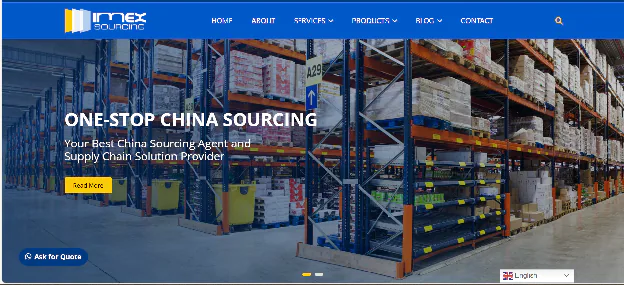
Imex Sourcing operates from Qingdao, a major industrial city in Shandong Province. As such, the agency has deep knowledge of sourcing across various sectors, which they use to rigorously vet suppliers, enforce legal compliance, and support businesses, particularly small and medium-sized enterprises.
Core services
- Long-term supplier relationship management.
- Documentation management.
- One-on-one import consulting.
Pros
- Cash-on-delivery service for small purchases.
- Access to off-platform private factory networks.
- Members of staff verify factories physically.
Cons
- The onboarding process may be complex at the start.
- Different agents use distinct formats to draft reports.
7. Guangzhou Sourcing
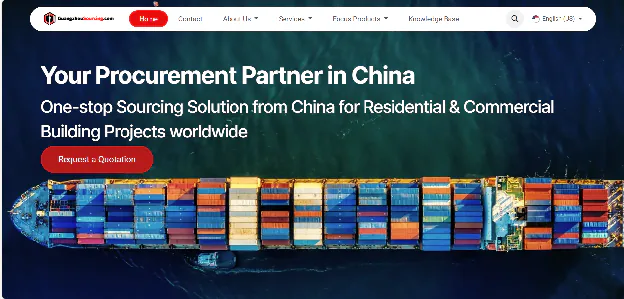
Guangzhou Sourcing is a China-based sourcing company that supports international buyers in finding and managing manufacturers across various product categories. Operating from Guangzhou, a major manufacturing and trading hub, the firm assists businesses with supplier identification, price negotiation, quality control, and export coordination.
Core Services
- Supplier sourcing and factory verification.
- Sample coordination and product development.
- Quality inspection, logistics and export documentation support.
Pros
- Supports end-to-end sourcing from supplier search to shipment.
- Experience working with international buyers.
- Helps manage communication with factories.
Cons
- Service depth may vary depending on product category.
- On-site presence limited to China.
8. Keen Sourcing
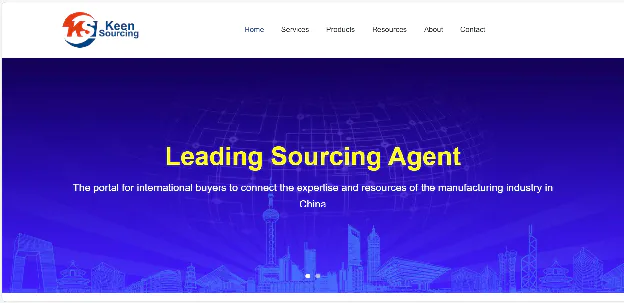
Based in Shanghai, Keen Sourcing offers sourcing solutions and even supply chain management services. The company employs specialized inspectors with notable certifications to test batch productions after selecting reliable manufacturers and suppliers.
Core services
- Sustainability and ethical sourcing guidance.
- Quality assurance.
- Logistics support.
Pros
- This agency provides cross-border payment support.
- Brands can opt for custom product development.
- The agents send near-real-time reports.
Cons
- There may be a delay in communication due to time zone differences.
- Over-standardization can limit flexibility.
9. Zy Sourcing
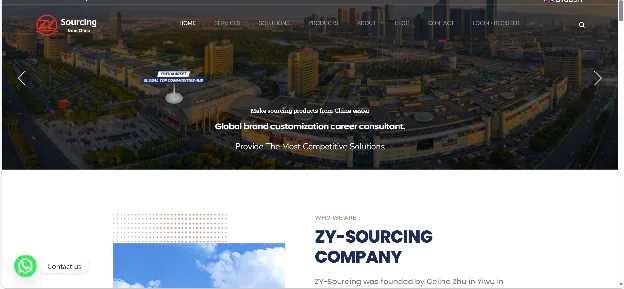
Zy Sourcing is a China-based sourcing company that supports international buyers in identifying manufacturers, managing production, and coordinating exports. The firm operates from China and works with B2B buyers that require supplier verification, structured procurement support, and on-the-ground oversight during production.
Core Services
- Supplier identification and factory screening.
- Price negotiation and contract coordination.
- Sample development and product confirmation.
- Production follow-up, quality inspection support, and export documentation.
Pros
- Local presence in China for factory visits and inspections.
- Supports structured procurement beyond simple order placement.
- Experience handling bulk and recurring B2B orders.
- Provides production visibility during manufacturing.
Cons
- Service scope may vary depending on project size.
- Primarily focused on China-based manufacturing markets.
10. JustChinait
With over 10 years of experience, JustChinait provides solutions for businesses of all sizes sourcing goods from China. The agency uses a series of structured plans to mitigate import risks, enabling clients to run their ventures profitably.
Core services
- Defect identification and revision monitoring.
- Translation of specifications and agreements.
- Warehousing and order fulfillment.
Pros
- This agency implements safeguards that prevent brand design theft.
- Its staff are experts in dispute resolution and mediation.
- It manages feedback constructively.
Cons
- There are extra charges for additional services.
- Multiple stages of review and internal approvals can slow down decision-making.
Benefits of Hiring a Chinese Sourcing Agent
B2B buyers, startups, e-commerce sellers, and procurement managers who use China sourcing agents for purchase and importation gain the following:
- Cost efficiency: Agents secure fair prices for quality goods without delay. They also prevent costly mistakes such as wrong orders and product defects.
- Risk reduction: They verify suppliers' reputation, limiting the occurrence of fraud, delivery of substandard goods, and compliance deficits.
- Time savings: Agents handle time-consuming sourcing tasks, allowing business employees to handle customer-facing functions without distraction.
- Operational simplicity: Agents understand cultural concepts that facilitate trade relationships with the Chinese and use them to build honest relationships with suppliers and logistics teams. This simplifies the purchase import process.
- Scalability for growing businesses: A strong agent can support scaling if supplier capacity allows.
A good sourcing agent streamlines international trade processes and serves as a bridge, connecting foreign buyers to the Chinese market.
How Much Does a China Sourcing Agent Cost?
There is no universally standard amount or fixed fee for hiring a sourcing agent from China. The cost varies based on your requirements and the agent’s pricing model. However, understanding the common pricing structures is a starting point for budgeting. In China, agents mostly use one of the following pricing models:
- Commission-based model: In this case, the agent takes 5-10% of the total order value. So, foreign buyers can negotiate a fair percentage for bulk or recurring orders.
- Flat project fee: The agent charges a specific amount for each task, regardless of the size of the order. This model is best for businesses that need limited services.
- Hybrid model: The sourcing agent sets a fixed fee, usually small, and collects a lower agreed commission. It's best for complex or long-term projects.
- Retainer model: The agent collects fees at monthly or quarterly intervals for sustained services over a lengthy period. Hence, it’s suitable for businesses with regular sourcing cycles.
| Pricing Model | Typical Cost Range | Best For | Key Pros | Key Cons |
|---|---|---|---|---|
| Commission-Based Model | 5–10% of the total order value | Importers placing large or recurring orders | Low upfront cost, the agent has an incentive to secure the deal and keep orders coming | Total fee grows as order value increases |
| Flat Project Fee | Around $200–$2,000 per project, depending on scope | Businesses that need limited or one-time sourcing help | Predictable cost and clear scope | Support may stop once the task ends |
| Hybrid Model | Small fixed fee + 2–5% commission | Complex sourcing projects or long-term supplier searches | Balanced structure that spreads risk between buyer and agent | Pricing varies depending on project complexity |
| Retainer Model | $500–$3,000+ per month, depending on services | Companies with continuous sourcing cycles | Consistent sourcing, support and supplier management | Requires an ongoing budget commitment |
Factors That Affect Cost
These pricing models do not provide an exact estimate of the amount that B2B buyers, wholesalers, and resellers ordering from China have to pay an agent. That’s because the price depends on various factors that are subject to change. Here are the factors that influence the prices set by China-based sourcing agents:
Product complexity: Technical products or those that require customization require more research. So the extra workload causes a price spike.
Order volume: Commission rates are lower for large orders because the agent earns more from the total order volume. Small orders require the same effort, so agents charge more to get a higher take-home.
Required service level: Basic supplier sourcing is affordable. But as services increase, so does the price.
Length of engagement: Long-term partnerships and retainer fees are cheaper than one-off projects. That’s because agents offer discounts for recurring patronage.
Industry and compliance needs: Products such as electronics and medical devices require additional safety testing, certification, and regulatory approvals, thereby incurring additional costs.
How to Negotiate Fair Pricing
Some agents are fraudulent, and others may include hidden charges that raise the total cost. To avoid being cheated, foreign buyers must list the exact task they need the agent to perform and document it in writing.
When the agent requests a certain amount, ask for a full cost breakdown with an amount tagged to each service on the list. This way, it becomes easier to evaluate if the charges are in line with industry range or overboard.
Business owners or their procurement team can then negotiate and request value-added services to make the most of the deal. Also, explicitly state which services you don’t need to avoid surprise mark-ups. Compare quotes from multiple agents before settling on one, and close the deal with a signed agreement.
Choosing the Right China Sourcing Agent
Businesses need agents whose service charges align with their budgets. Regardless, it's wrong to focus solely on price when selecting an agent. Those who agree to fees below the normal range may not provide the full range of services. So while you consider money, prioritize the value you'll receive in exchange for it.
Here are factors for foreign buyers to consider when choosing a China sourcing agent:
- Experience and industry-specific track record: Ask about how long the agent has been in the sourcing business. Find out if they’ve worked with others in your industry on the same product and the results they’ve achieved.
- Transparency and ethics: Ensure that the agent is open about their pricing structure, sourcing methods, and supplier relationships.
- Communication skills: The agent should be able to communicate clearly, coherently, and effectively in Mandarin and English. It's a bonus if they speak Cantonese.
- Quality control capability: Learn about the agent’s raw material inspection, production monitoring, and final inspection processes to know if they are effective.
- Legal contracts and service agreements: Confirm whether the agent uses clear contracts with well-defined terms, proper documentation, and compliance with applicable standards.
- Physical Proximity or Availability: Find out whether the agent has an office near you, in addition to the main operational base. If they don't, confirm that there is an open channel of communication.
Remember, it’s better to pay more to hire a competent sourcing agent than to choose a cheaper option and suffer losses from supplier fraud or poor products.
Step-by-Step Guide to Working With China Sourcing Agent
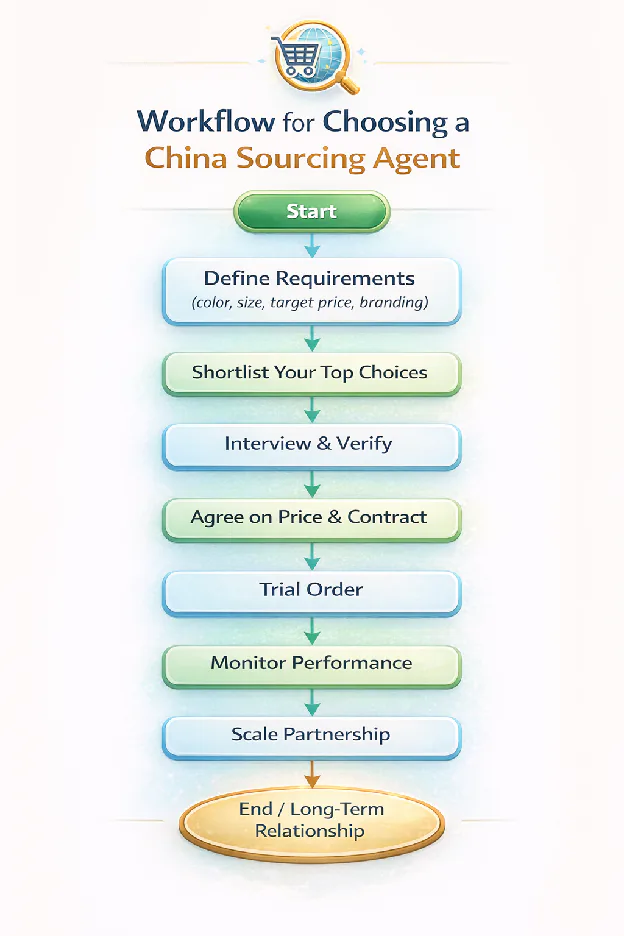
Now you know some of the most reputable and trustworthy agencies that help foreign customers source goods in the Chinese market. But to get the best results while working with them, you need to understand the processes to follow. International B2B buyers who follow the right processes face less risk, avoid mistakes, and find it easier to develop a lasting partnership.
Here is a breakdown of the due processes to follow when using a sourcing agent located in China.
- Define your product requirements: Buyers must first outline specific criteria for the products they need. Knowing details like the color, size, target price range, and branding needs simplifies communication.
- Research and shortlist agents: Agents offer varying levels of service based on their expertise. Find those who specialize in the appropriate business sector and offer services that address the key focal points for your brand. Select your top 5 choices.
- Conduct interviews and background checks: Engage with your candidates to assess professionalism and key skills. Ask for documents that prove their business identity and clarification for any uncertainties.
- Agree on pricing and scope: After selecting an agent, state the services your company needs and the amount you’re willing to pay. If the agent accepts the offer, it’s time to draft a contract.
- Place a trial order: Avoid bulky first orders. Use a small order to evaluate the agent’s product quality and accuracy, communication speed, delivery time, and overall performance.
- Monitor performance: Watch how the agent follows up with manufacturers and monitors the production process. A good agent will give regular reports, provide inspection results, handle delays and defects while being transparent,
- Scale partnership: If the agent performs well during the trial phase, gradually increase your order volume. Eventually, you can sign a long-term contract, expand product lines, and explore custom products.
FAQ Section
What Is the Role of a China Sourcing Agent in B2B Procurement?
A China sourcing agent helps B2B buyers identify qualified manufacturers, verify factory capabilities, negotiate pricing, and oversee production. The goal is not just to place orders but to reduce risk, protect margins, and ensure supply continuity.
How Do Enterprises Control Risk When Sourcing from China?
Enterprises control risk by conducting factory audits, confirming production capacity, reviewing compliance certifications, and setting clear contractual terms. Many also use dual sourcing or exposure limits to reduce dependence on a single supplier.
How Long Does the Sourcing Process Take?
The entire sourcing process may take a month or more, depending on operational speed. Most of the time, research and negotiation, sampling and revision, production, and shipping preparation vary widely depending on product type and complexity.
What is the Difference Between a Sourcing Agent and a Freight Forwarder?
A sourcing agent and a freight forwarder handle different stages of the importation process. While sourcing agents focus on getting products from reliable suppliers, freight forwarders handle logistics and transportation, ensuring that goods move safely from factories to the destination country.
How do I Avoid Scams When Hiring a China Sourcing Agent?
To reduce the risk of scams when ordering from China-based suppliers or manufacturers, confirm that they have a registered company or other proof of legitimacy. Also, refrain from paying in full before the transaction ends. Check reviews for feedback, start with a small test order, and use secure, traceable payment methods.
Final Thoughts
Many B2B companies source from China because it offers strong manufacturing capacity, deep supplier networks, and competitive production economics across many product categories.
However, navigating supplier selection, pricing transparency, compliance, and cross-border coordination can be complex. That is why many importers rely on structured sourcing support to reduce risk and improve visibility before committing volume.
Whether you work with a traditional sourcing agent or prefer a structured digital platform like ChinaSource, the key is clarity. When supplier data is organized, quotes are aligned, and assumptions are documented, procurement teams can make confident award decisions. If you are evaluating sourcing partners or exploring more structured procurement workflows, you can explore how ChinaSource supports supplier discovery, comparison, and allocation planning.